
The temperatures in Southeastern PA don’t typically drop and get real cold until right before Thanksgiving. This is the time to re-commit to your inversion practice.
Here is a simple sequence to follow. One of the nice things about it is that it can be done right before bed, as the calming and restive effects of Sarvangasana and Halasana can also help you sleep better.
Before doing any inversion, it is best to get the head lower than the heart first. This prepares the body for the change in blood pressure that inversions cause.
Here, I started in Uttanasana with my fingers interlaced behind my back. This arm position also prepares the arms to be backward in extension as they are for Sarvangasana.
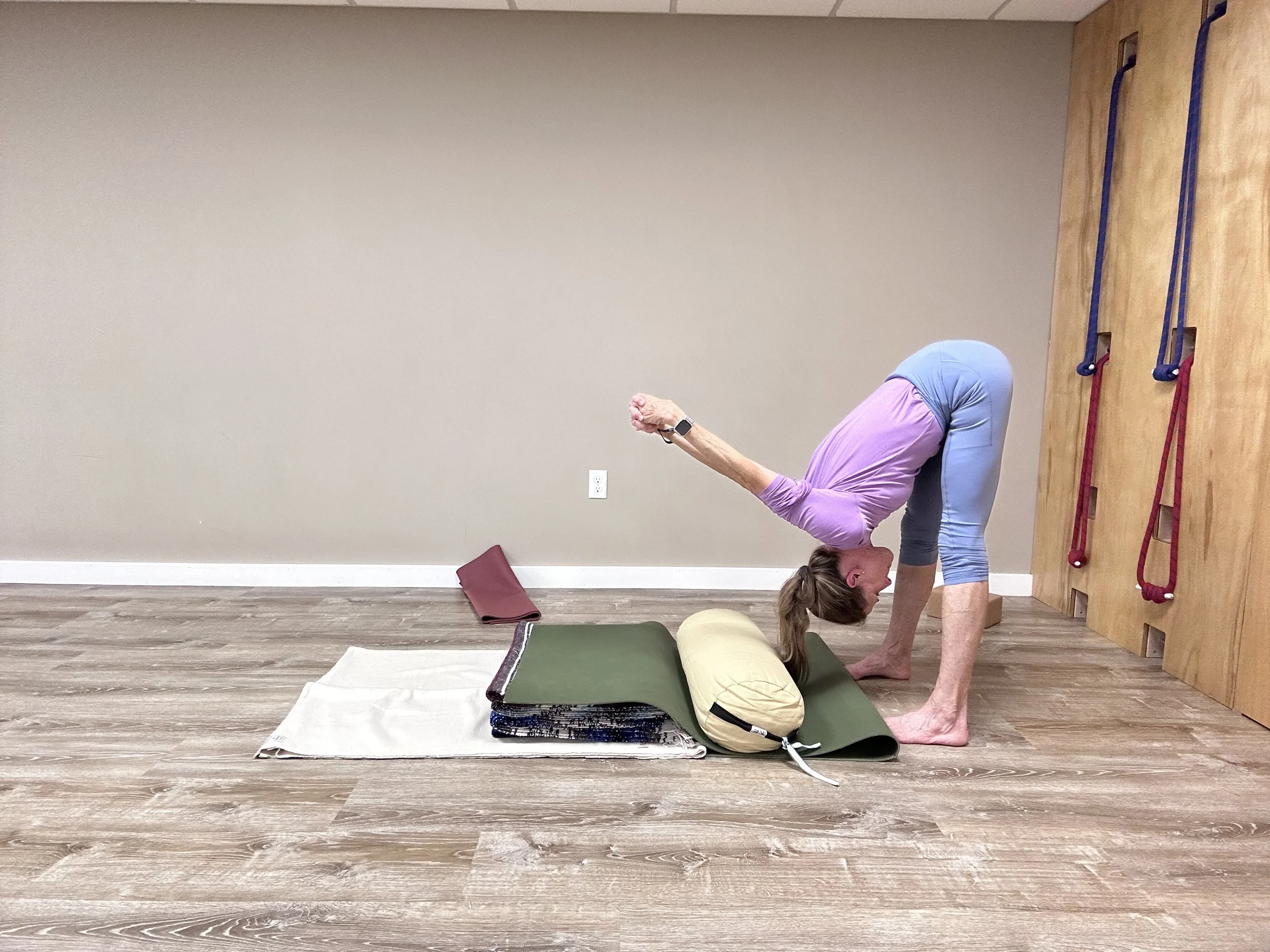
Make sure you do both interlaces of the fingers.
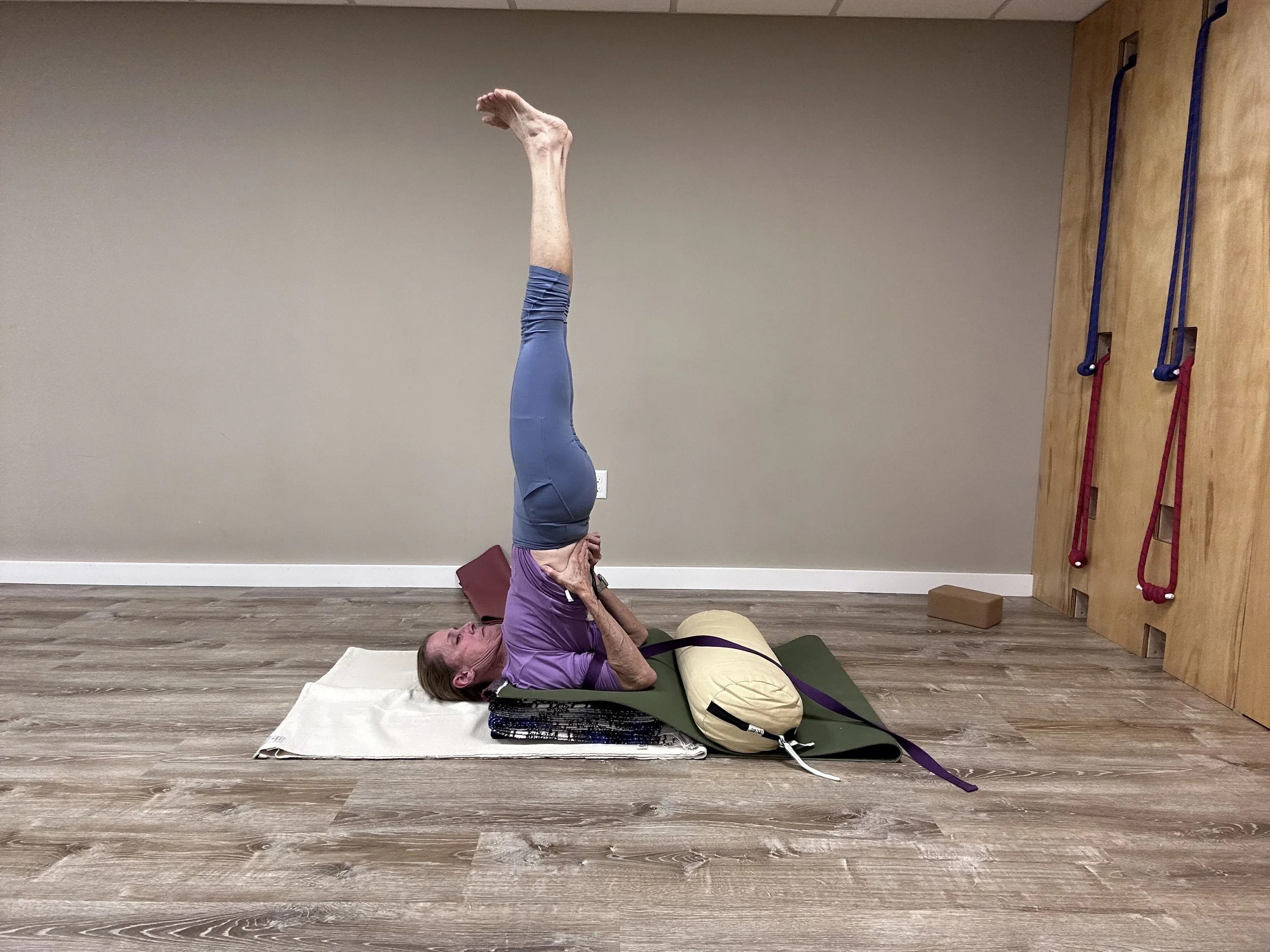
As you can see, I already have my blankets set up for Sarvangasana.
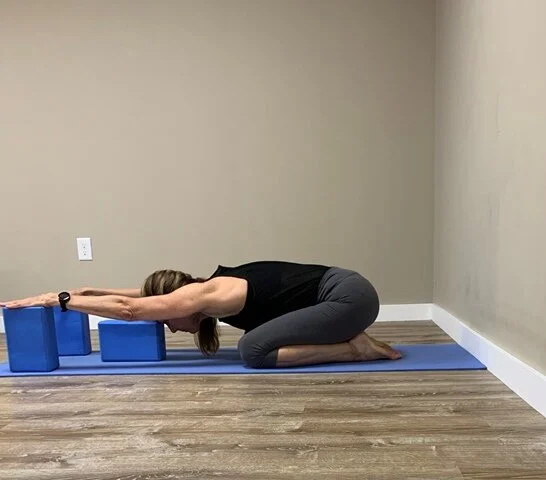
You could also start in the classic way of: Adho Mukha Virasana (Child’s Pose), Adho Mukha Svanasana (Downward facing Dog) and Uttanasana (Standing Forward Bend)


Try to stay in Sarvangasana for three to five minutes, or to your capacity.
Then come into Halasana.
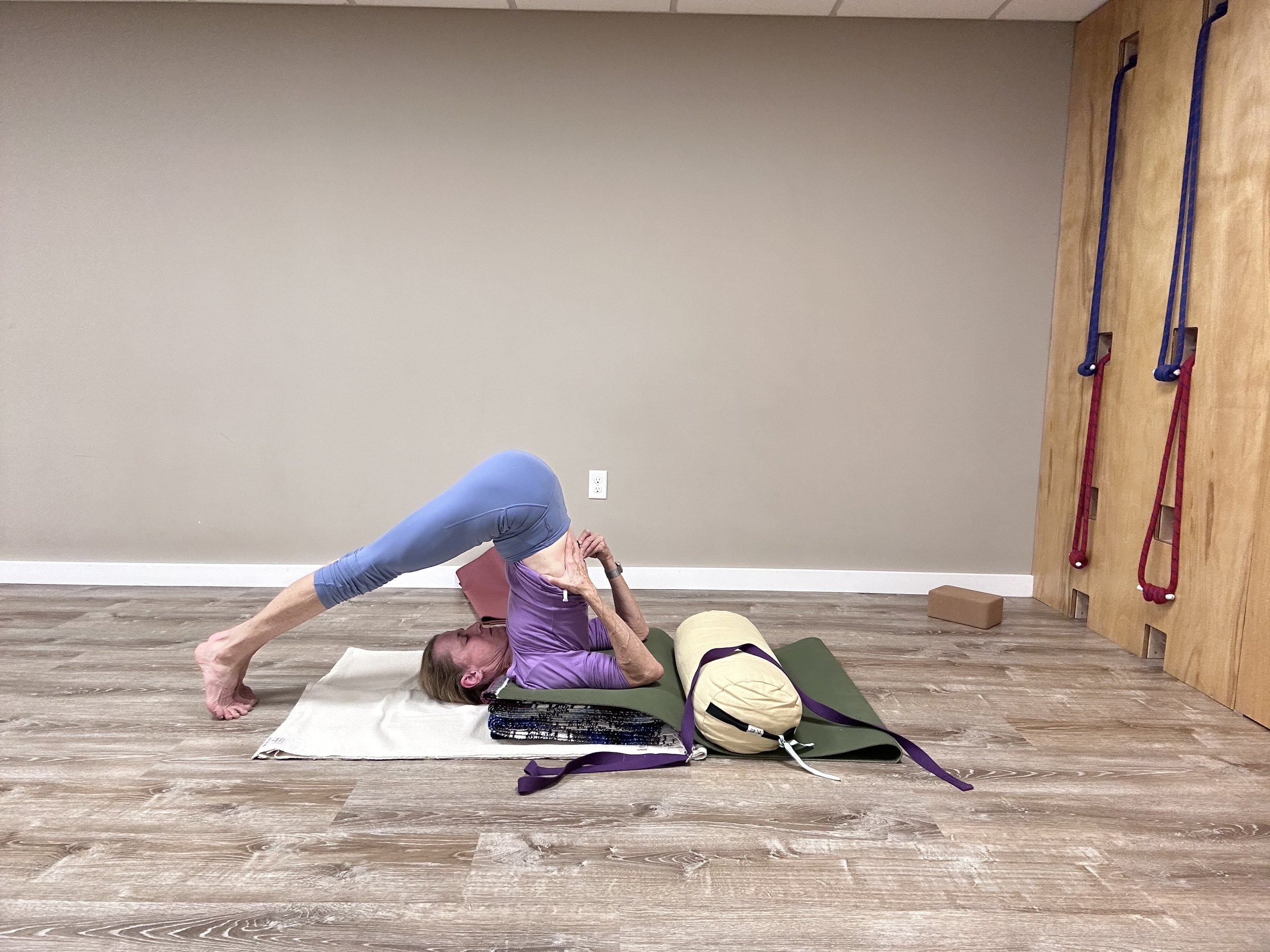
Try to stay in Halasana for 1 to 3 minutes, or for as long as you hold Sarvangasana. If you find this challenging, try the chair supported version.
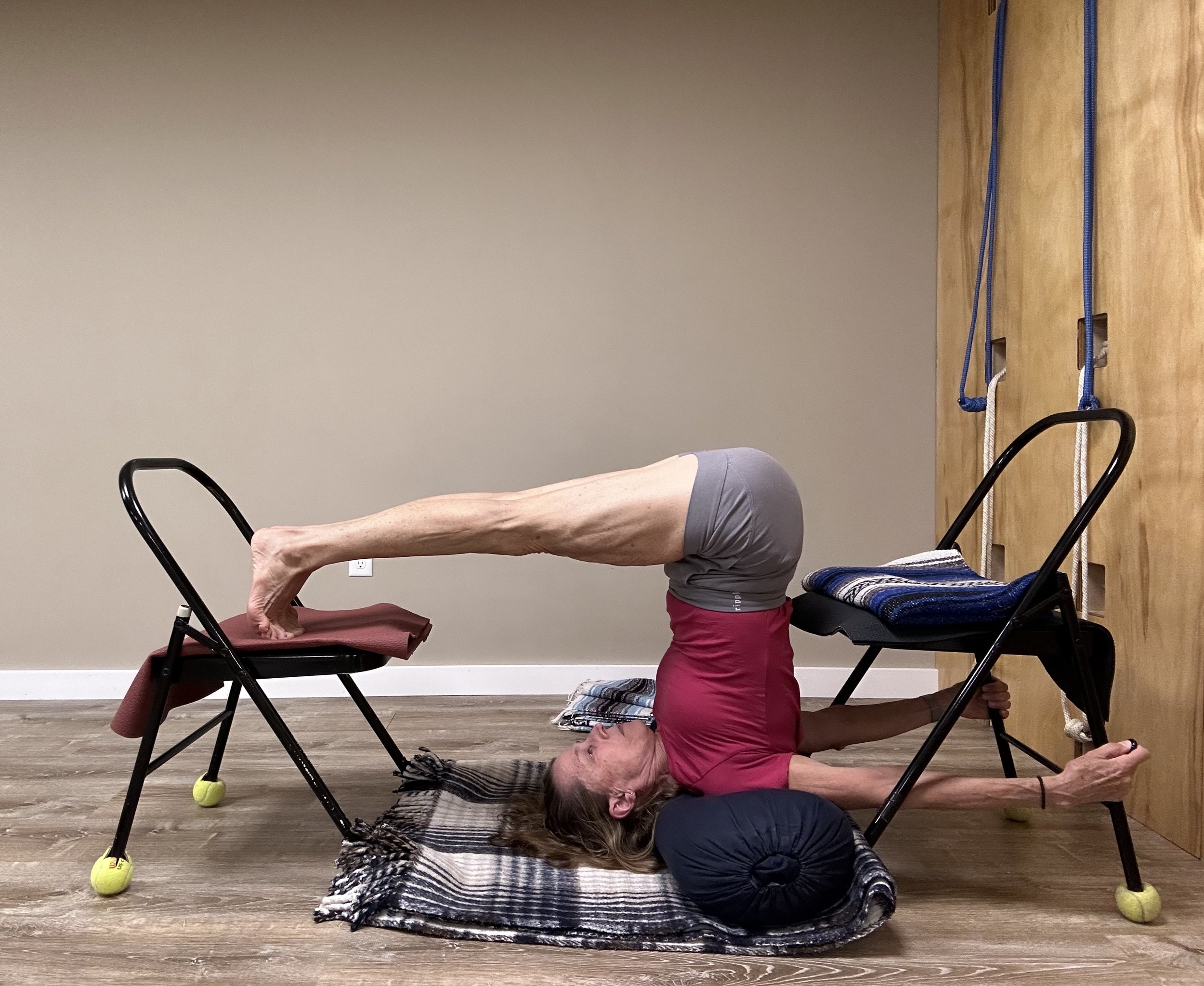
You could also do Halasana with the feet supported on a chair, or Ardha Halasana. I came into this from Chair Sarvangasana
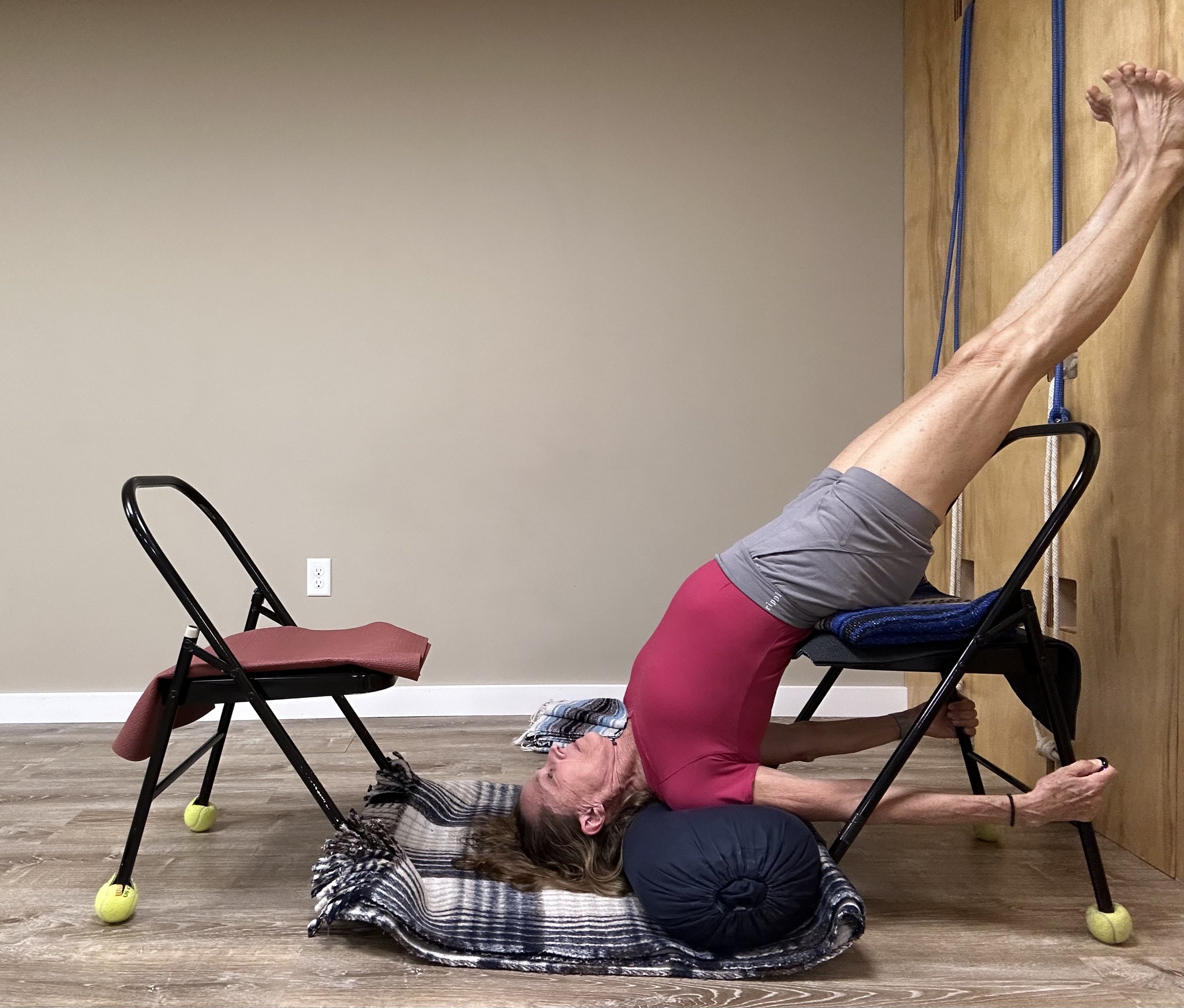
Chair Sarvangasana
To finish, slide back from Sarvangasana into a version of Setu Bandha Sarvangasana
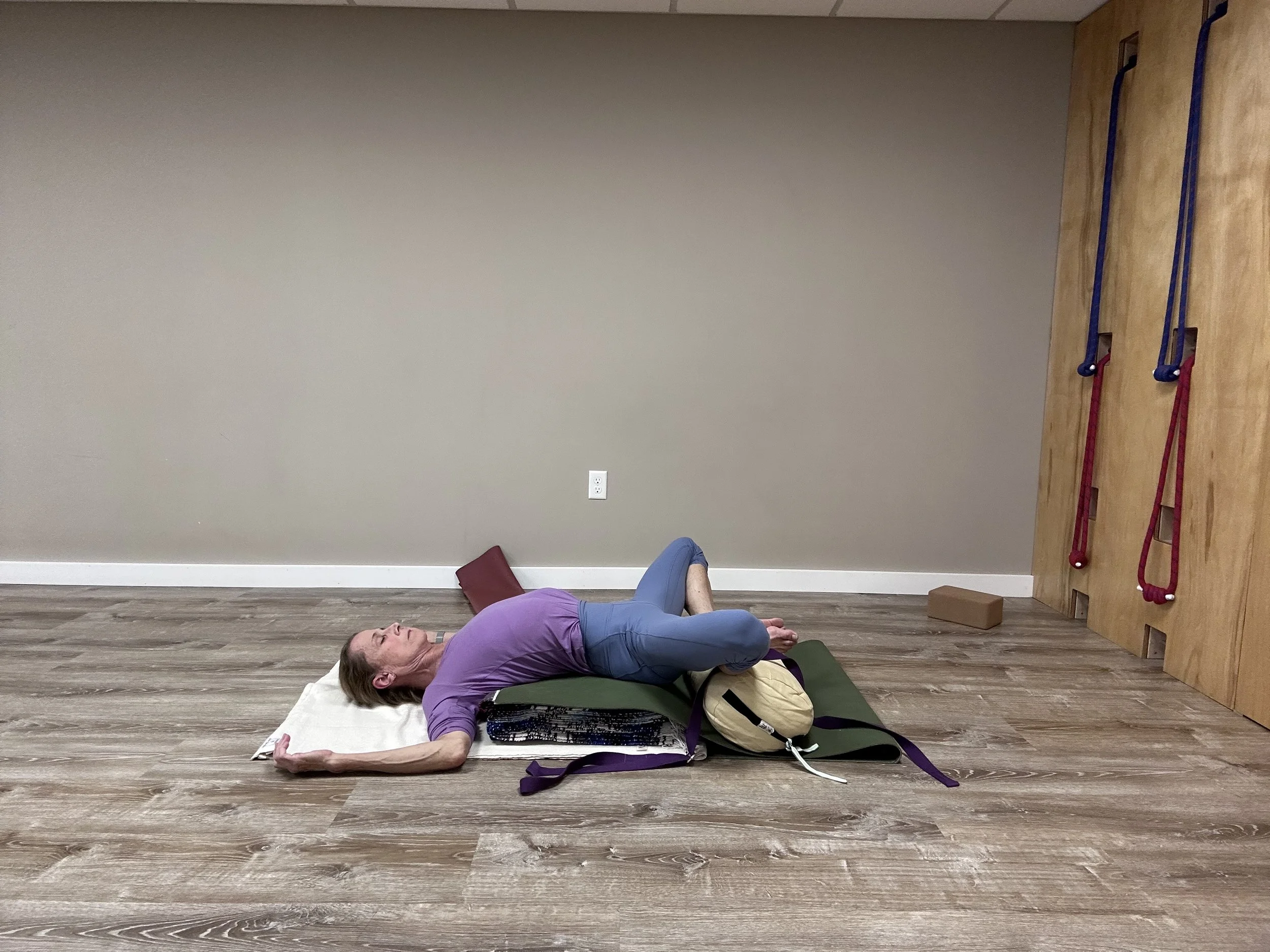
Make sure you slide back skillfully without using your arms. The goal is to slide back just enough so that your shoulder blades are still on the blankets and your chest is lifted. Rest here for three to five minutes.
In Light on Yoga, Mr. Iyengar lists a lot of benefits for Sarvangasana and Halasana. He says that Sarvangasana is the Mother of all asanas. He gives the analogy that Sarvangasana is like a stereotypical mother who would strive for harmony and happiness in the home, so this āsana strives for the harmony and happiness of the human system.
Sarvangasana is said to be a panacea for most common ailments. There are several endocrine organs or ductless glands, like the thyroid and lymph nodes, in the human system. These organs are ductless, that is that they don’t secrete hormones or absorb nutrients directly from or into the bloodstream. They depend on the squeezing and rinisng action of the muscles to circulate the fluid around the system. These endocrine glands are part of the immune system. Being in an inverted position also helps lymph to circulate through the body. You may have experienced this if you have ever sprained your ankle where one of the instructions is to elevate the foot higher than the heart to help drain the swelling (an immune system response).
From Light on Yoga:
“Sarvāngāsana does this for the thyroid and parathyroid glands which are situated in the neck region, since due to the firm chinlock their blood supply is increased.
Further, since the body is inverted the venous blood flows to the heart without any strain by force of gravity. Healthy blood is allowed to circulate around the neck and chest. As a result, persons suffering from breathlessness, palpitation, asthma, bronchitis and throat ailments get relief.
As the head remains firm in this inverted position, and the supply of the blood to it is regulated by the firm chinlock, the nerves are soothed and headaches – even chronic ones – disappear.
Continued practice of this āsana eradicates common colds and other nasal disturbances.
Due to the soothing effect of the pose on the nerves, those suffering from hypertension, irritation, shortness of temper, nervous breakdown and insomnia are relieved.
The change in bodily gravity also affects the abdominal organs so that the bowels move freely and constipation vanishes. As a result the system is freed from toxins and one feels full of energy.
The āsana is recommended for urinary disorders and uterine displacement, menstrual trouble, hemorrhoids and hernia.
It also helps to relieve epilepsy, low vitality and anaemia.
It is no over-statement to say that if a person regularly practises Sarvāngāsana they will feel new vigour and strength, and will be happy and confident. New life will flow into them, their mind will be at peace and they will feel the joy of life.
After a long illness, the practice of this āsana regularly twice a day brings back lost vitality.
The Sarvāngāsana cycle activates the abdominal organs and relieves people suffering from stomach and intestinal ulcers, severe pains in the abdomen and colitis.
People suffering from high blood pressure should not attempt Sālamba Sarvāngāsana I unless they do Halāsana first and can stay in it for not less than 3 minutes.”
Iyengar, B. K. S.. Light on Yoga: The Definitive Guide to Yoga Practice (p. 171). HarperCollins Publishers. Kindle Edition.