
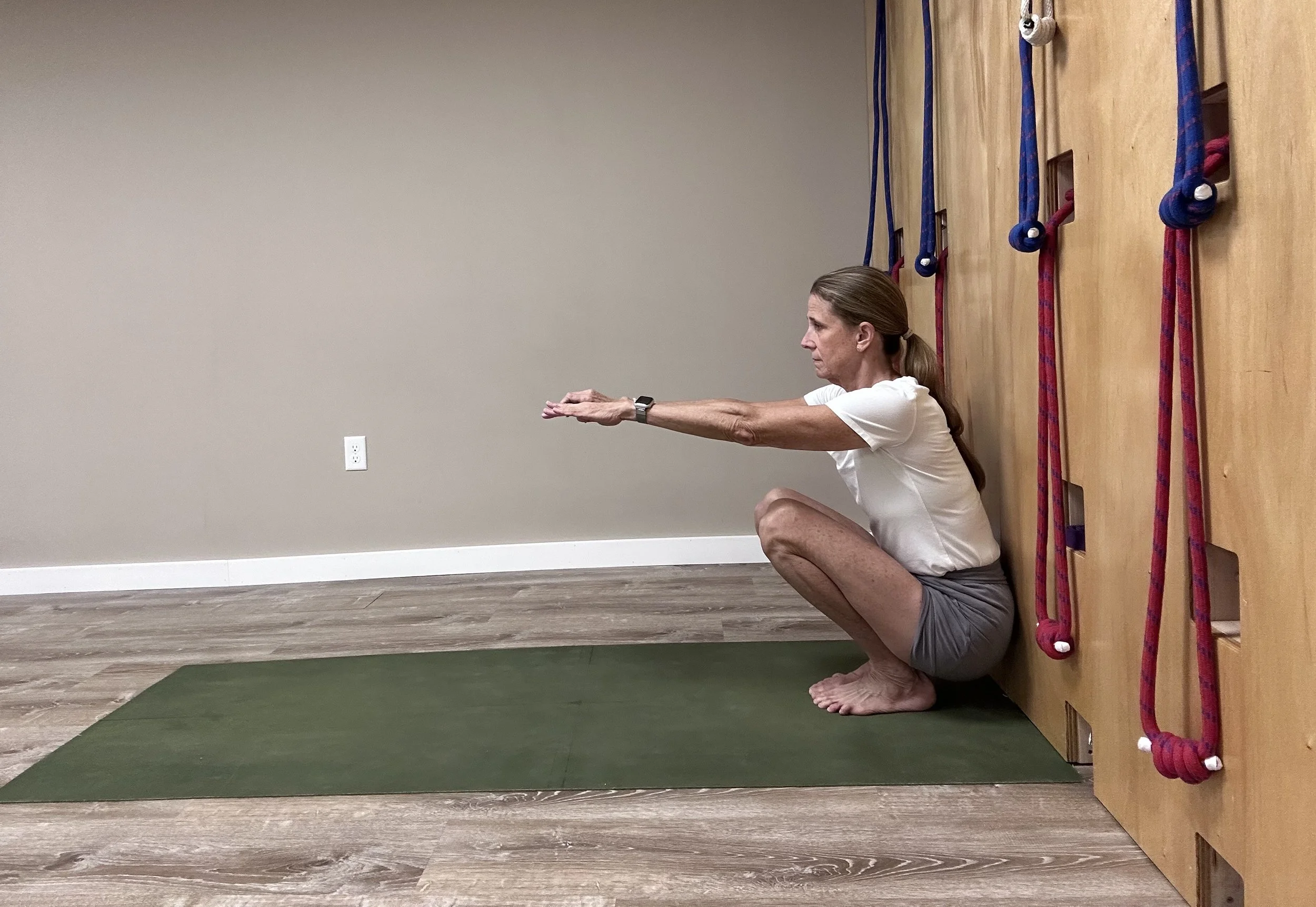
Malasana, or Garland Pose, is one of those benchmark poses that is important to the performance of more advanced poses like Bakasana (Crow) or any of the Marichyasana poses.
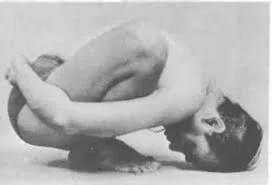
BKS Iyengar in Malasana I
It is considered a standing pose because both feet are on the ground. It is also considered a forward bend because of the deep hip flexion.
To do this pose you will need ankle, knee and hip flexibility.
Let’s take a look at where you first see this shape.
Everybody knows Adho Mukha Virasana (Child’s Pose). In this pose, the buttocks should press on the heels and the torso extends forward.
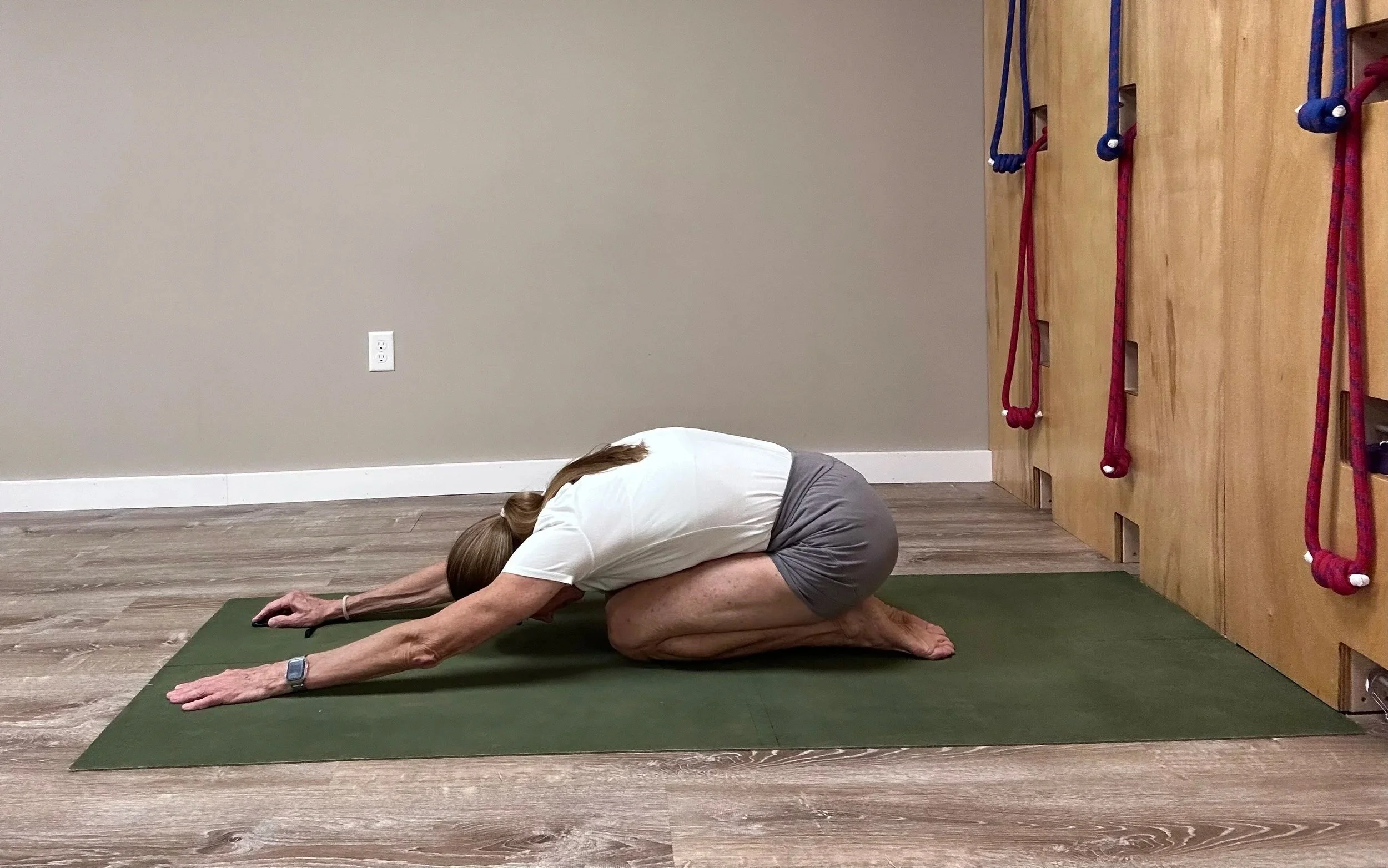
Adho Mukha Virasana, toes pointing straight back
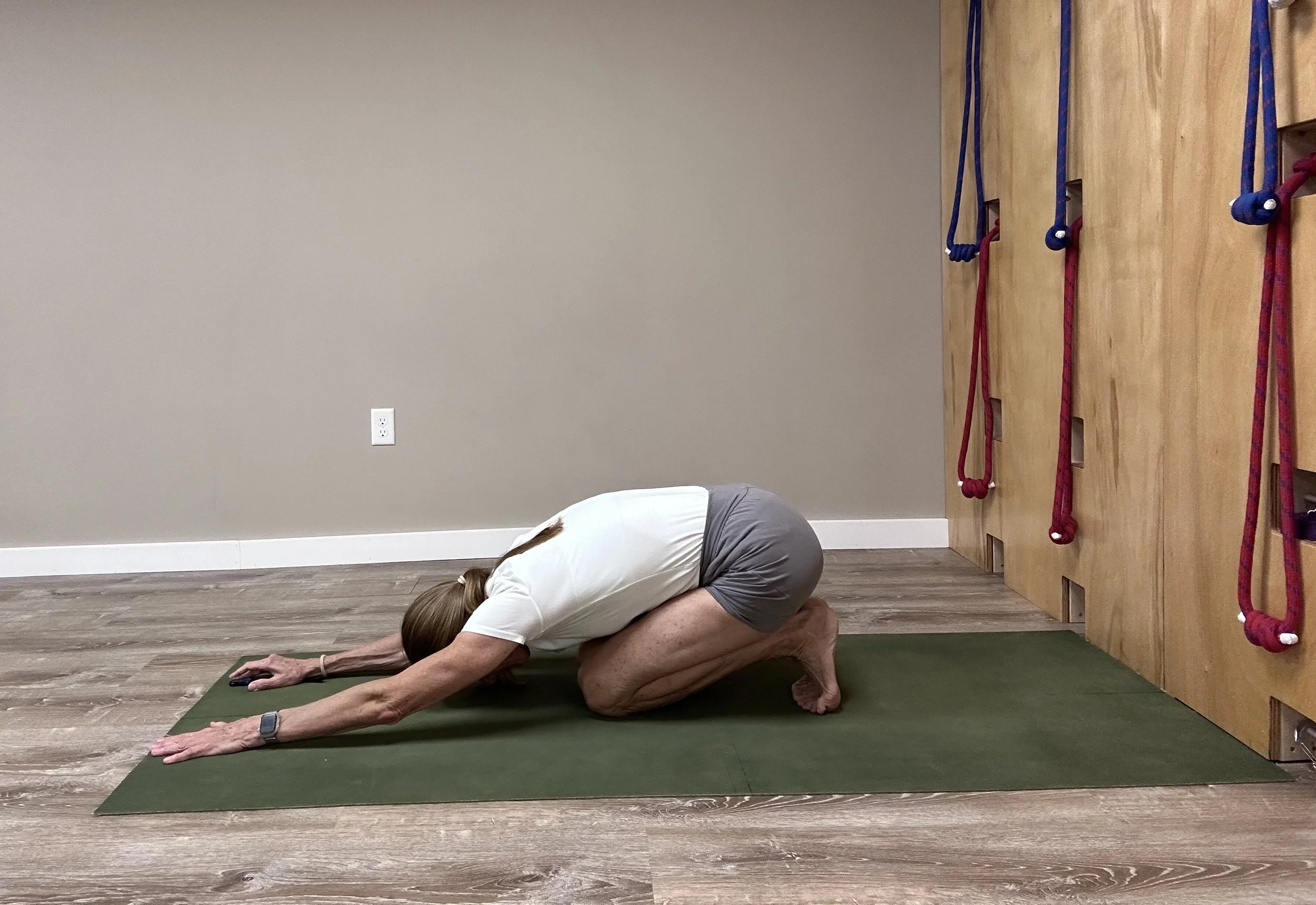
Adho Mukha Virasana with the toes tucked under. Can you see the Malasana shape?
What can you do if you have knee issues and cannot do Adho Mukha Virasana? The simplest thing to do is to try the pose lying on your back. This can take the pressure off of yoru knees. You can try putting a spacer behind your knee like a rolled up hand towel. Or, if you cannot bend your knees all the way due to a knee replacement or arthritis you can try sitting on one chair and folding forward to another chair.
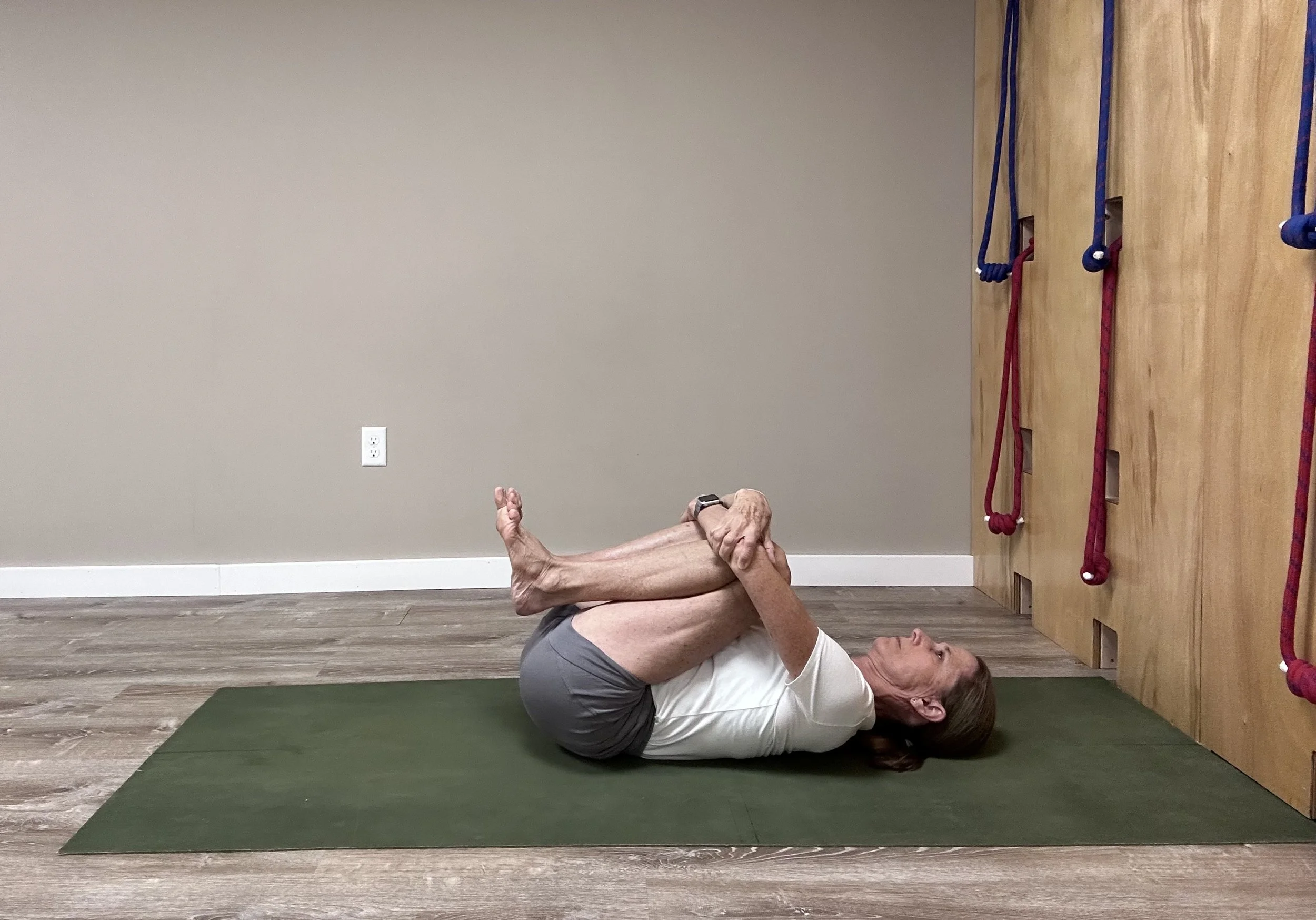
Dwi Pada Pavana Muktasana
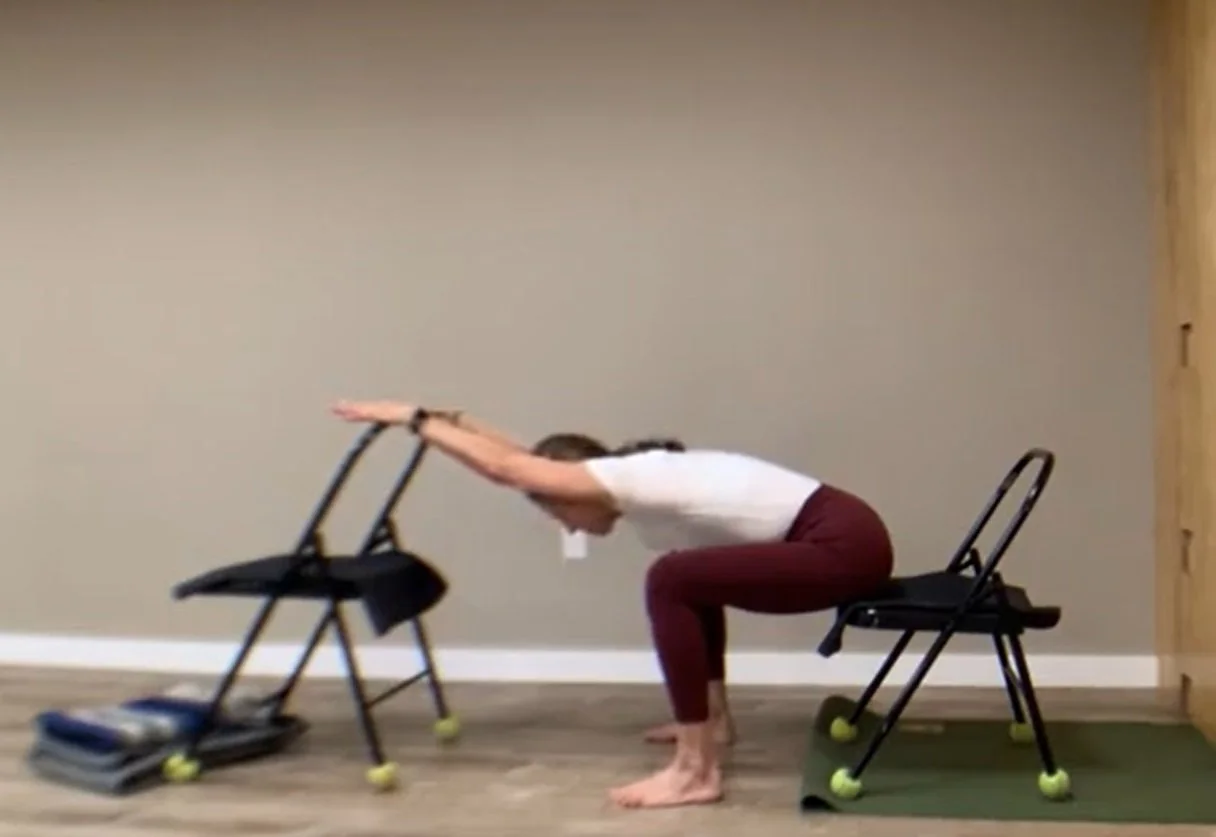
Adho Mukha Virasana with two chairs
If you can do Adho Mukha Virasana easily, you can try coming into Malasana. The first way it is learned is with the sacrum against the wall. The wall keeps you from falling backwards and fallows you to stay and feel what is tight and what needs to be released or strengthened
Malasana with the sacrum against the wall. Heels are down.
Another pose to get familiar with is Utkatasana
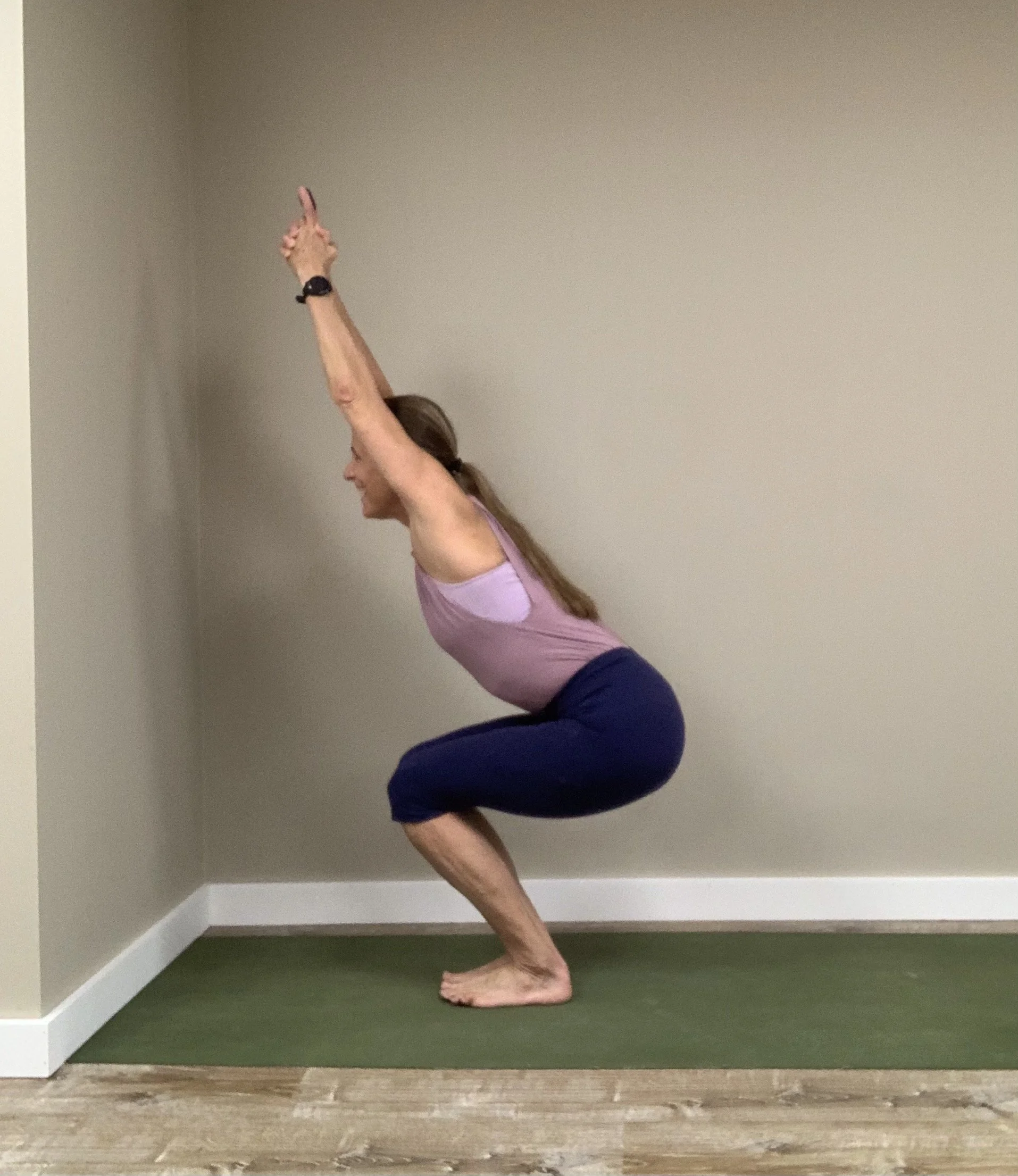
Utkatasana or Fierce pose is a challenging pose to keep the heels down, knees and toes together
From Utkatasana you can try lowering down all the way into Malasana. This is the first stage of the pose.
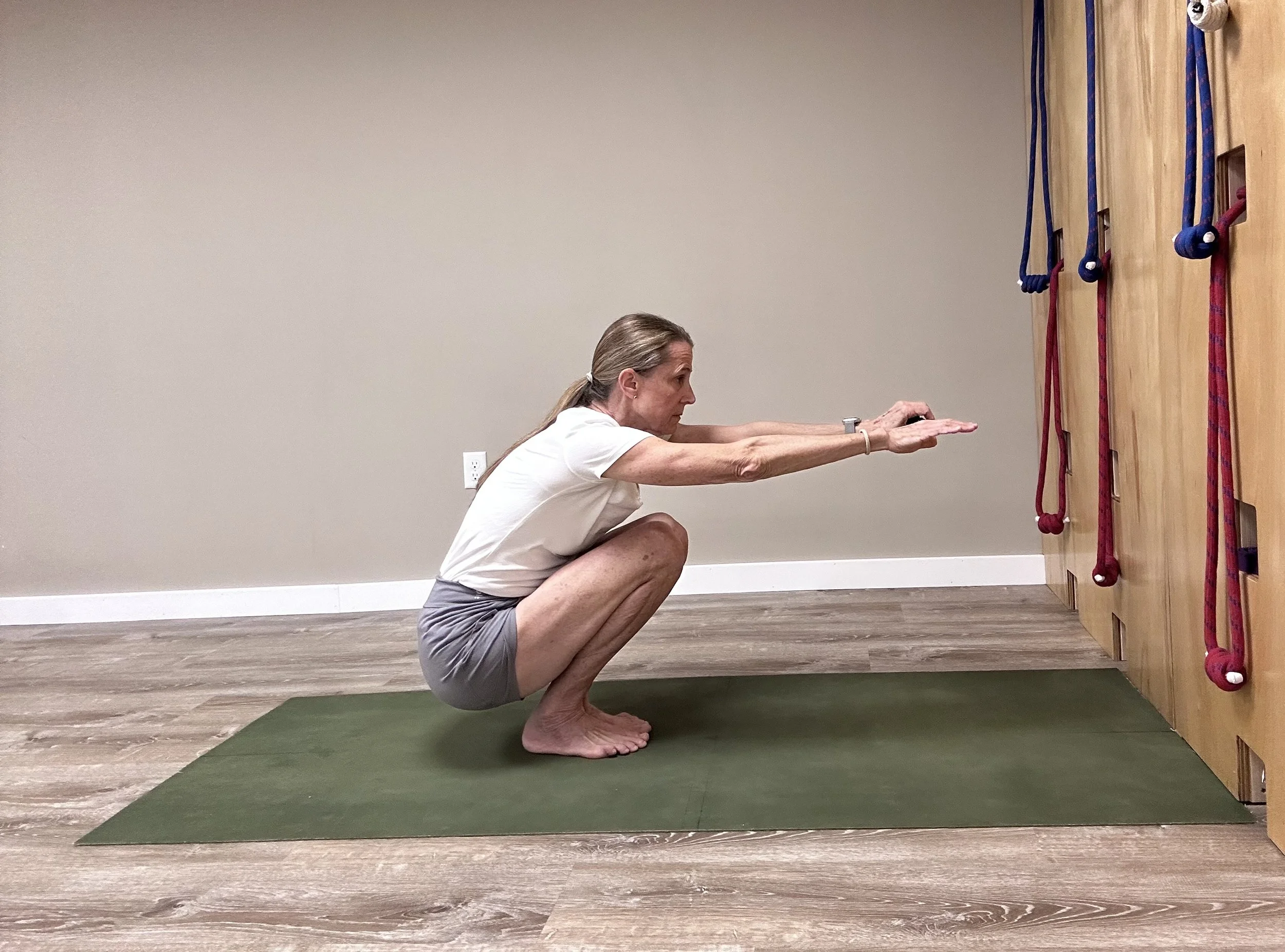
The upright stage of Malasana
After learning to come into Malasana with the sacrum on the wall, you can move into the middle of the room. You can start with the feet parallel and hip width apart. If the heels don’t stay down you can try supporting the heels, or holding a weight out in front of you.
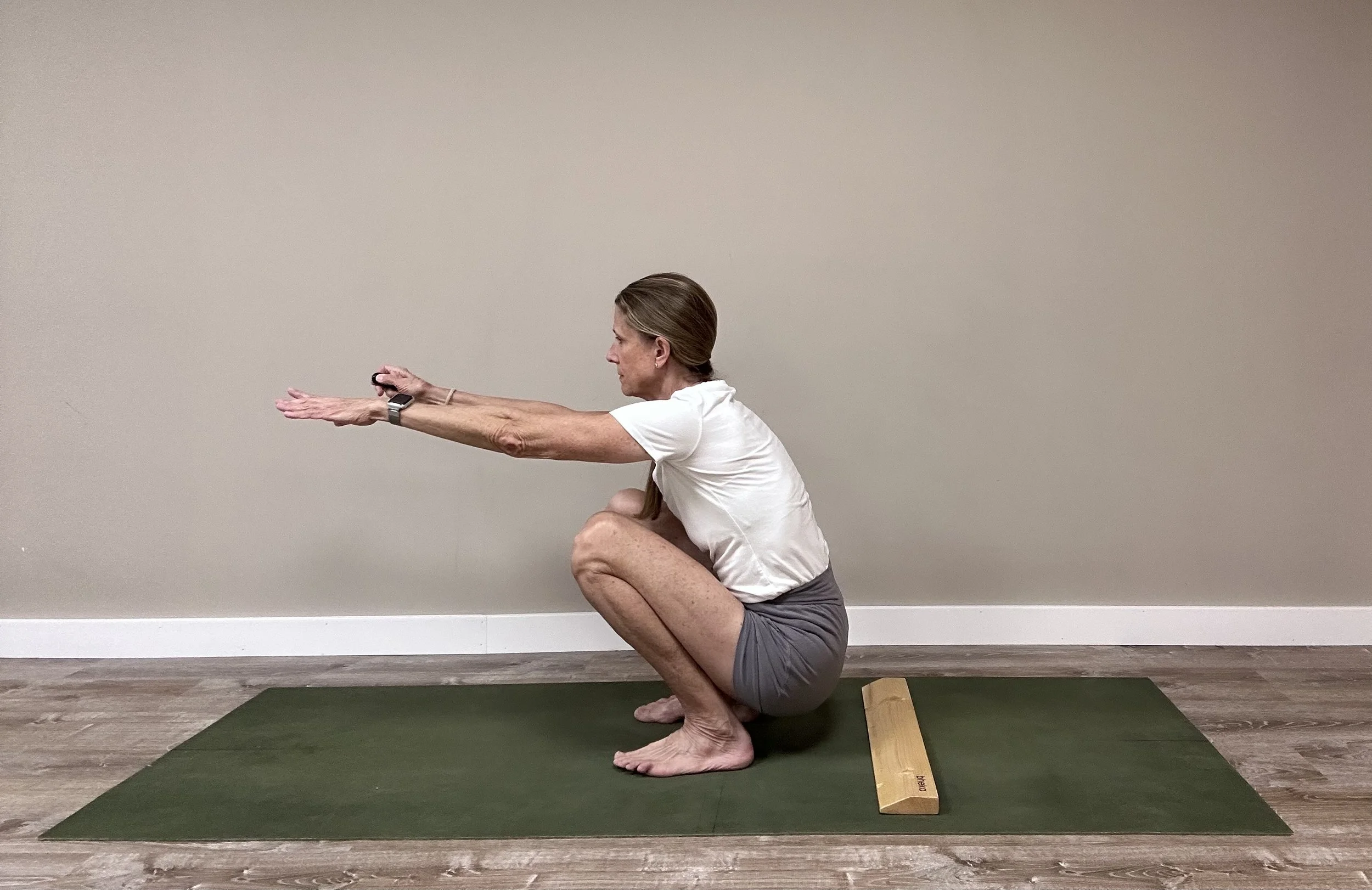
Feet apart
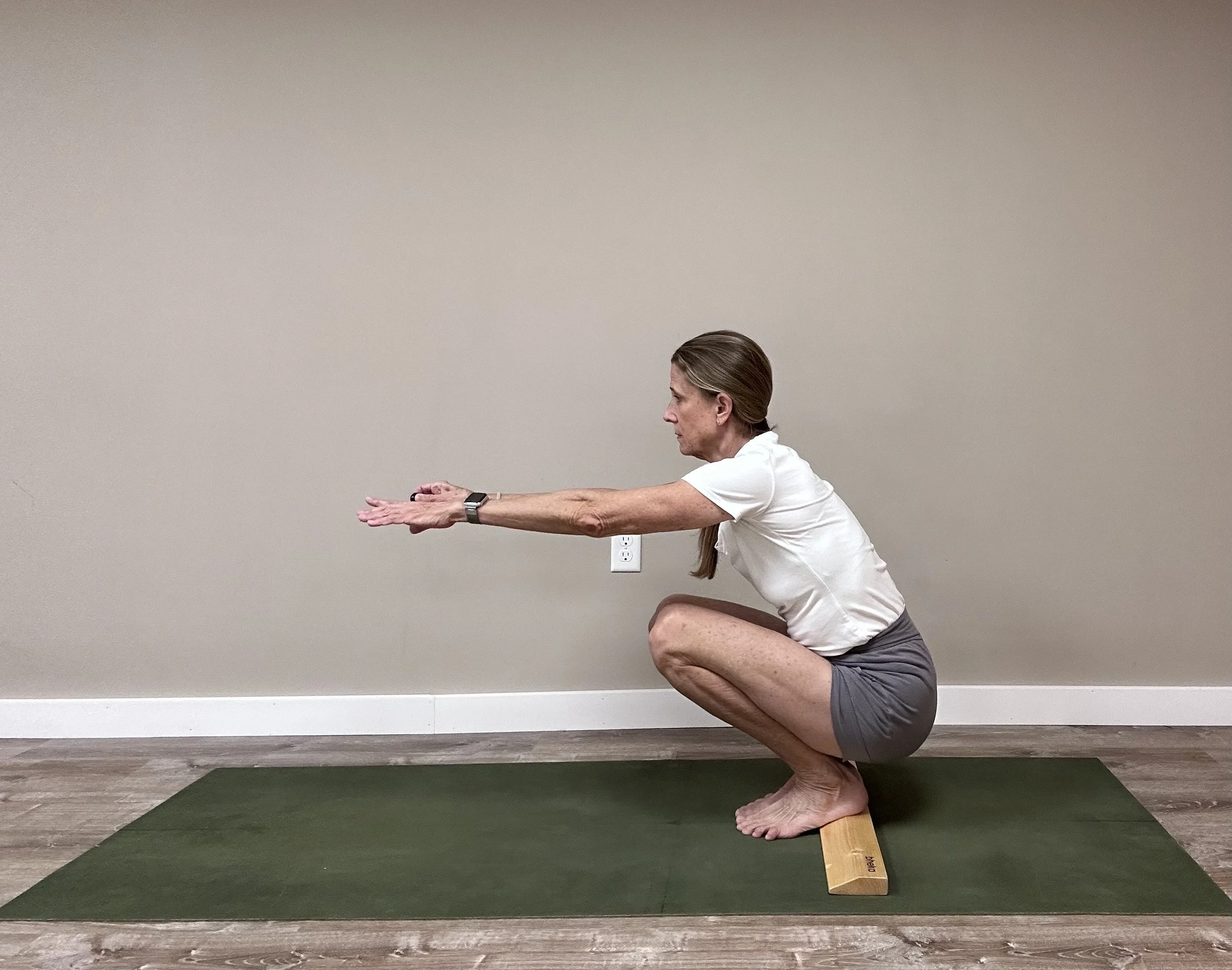
Heels supported on a slanting plank.
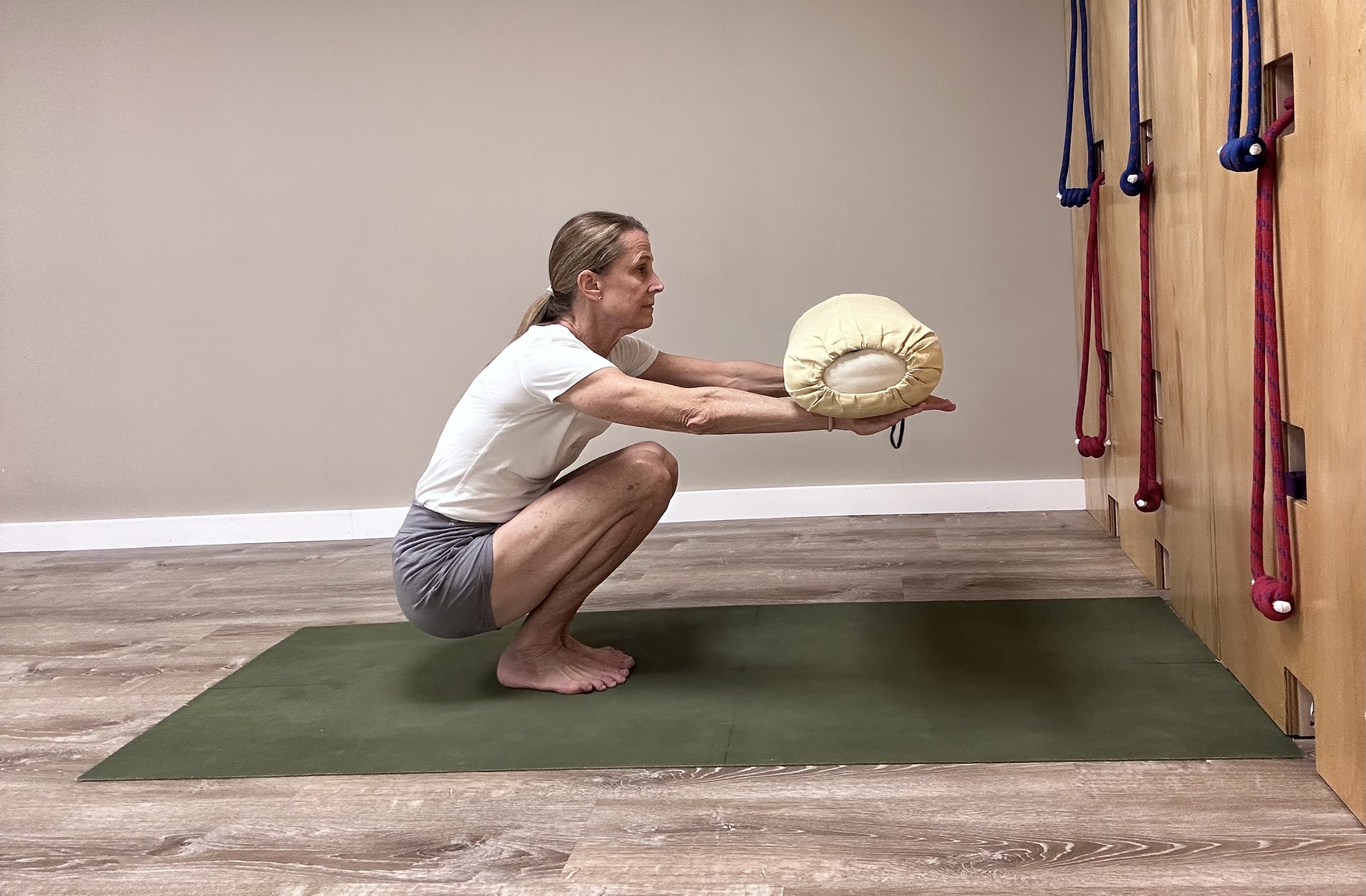
Holding a weight
Once you can come into the pose with the heels down and the feet together, then we can progress to opening the knees and taking the trunk forward between the legs. If your knees won’t let you do this, try the version in the chair. Eventually you reach around your knees and hold your ankles with the head on the floor (I’m working on that part!)
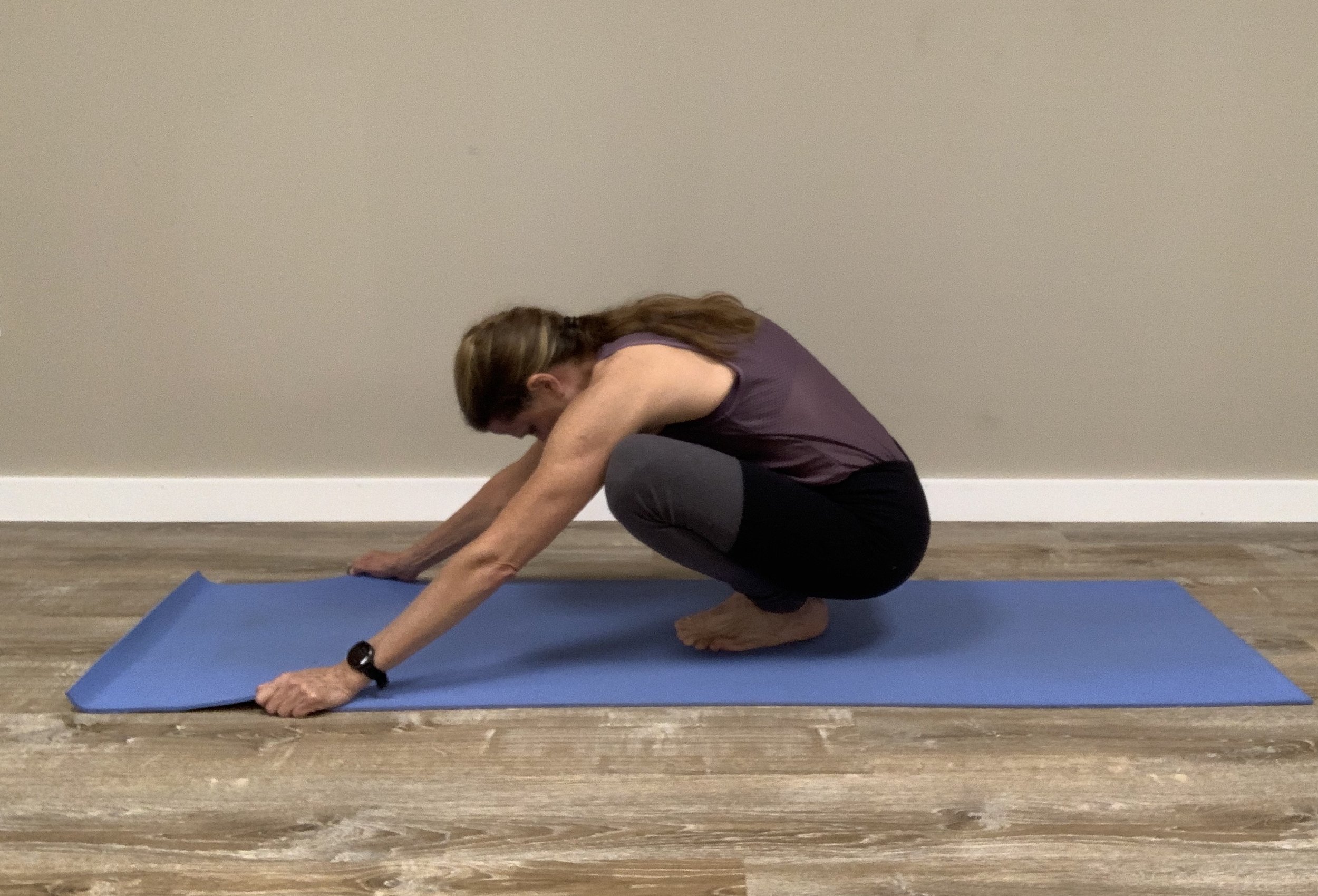
Holding the mat
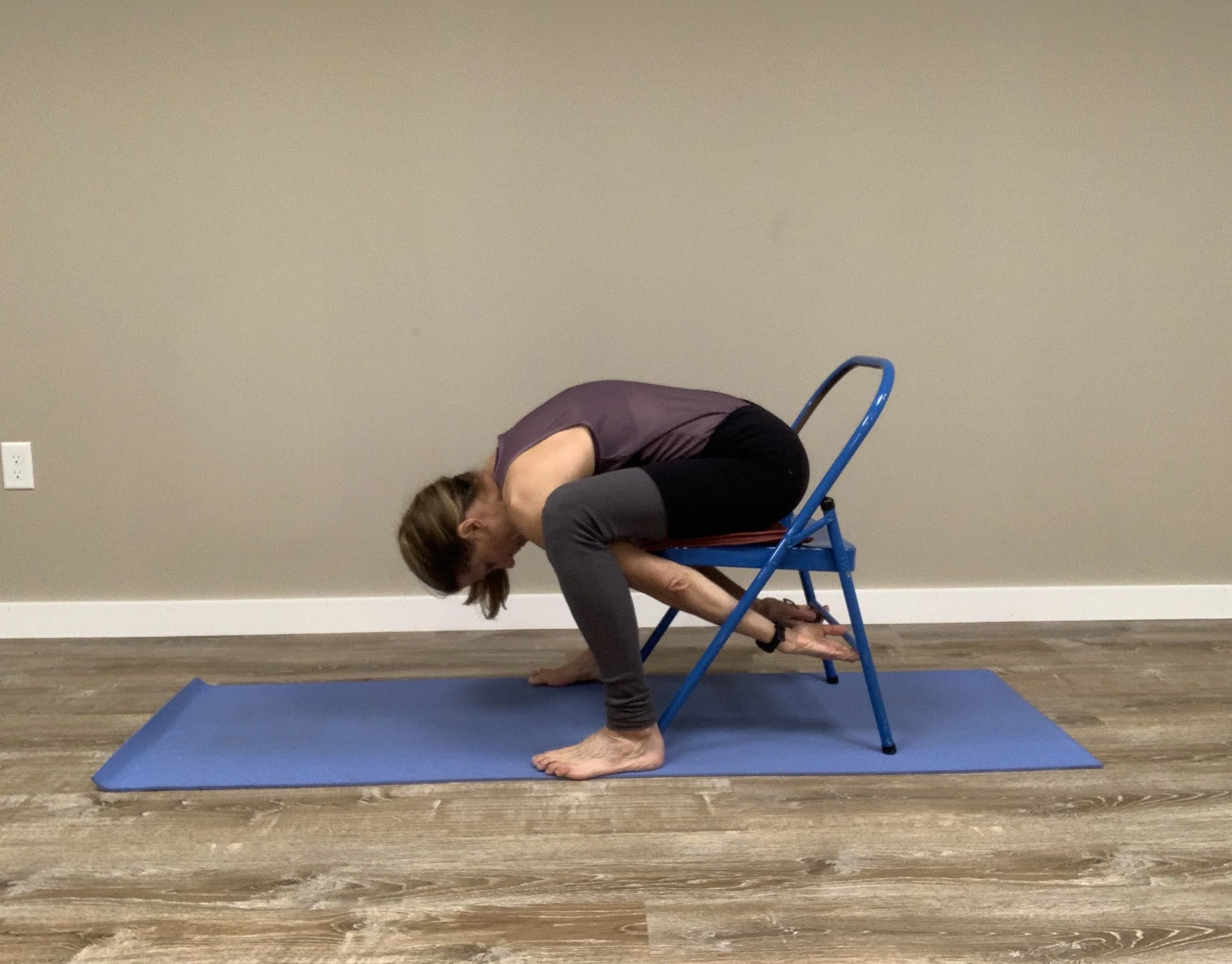
Sitting on a chair and holding the back legs
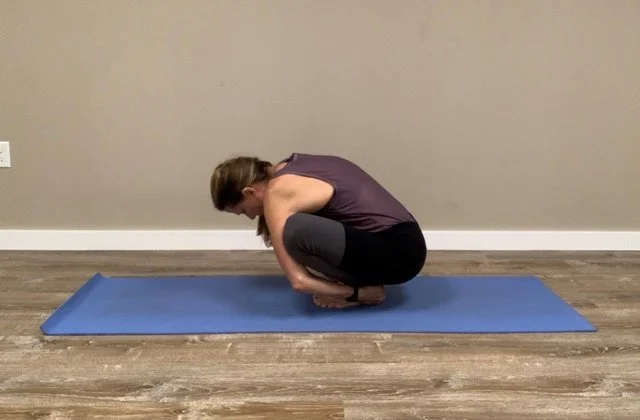
Holding the ankles