Philosophy

The Eight Steps to a Yogic Lifestyle - Step # 1 - Ahimsa or Non-Violence

Sometimes the stages or steps of yoga are described as a ladder; you progress in an orderly fashion from one stage to the next. At other times the stages of yoga are described as spokes of a wheel that radiate in toward a center. In either case, the point is to be working toward a more highly evolved state, or Samadhi. In reality, the stages tend to overlap each other and lack of progress in one stage may send you back to one of the other stages looking for answers.
For instance, say you want to work on meditation, but you have a hard time sitting still; you can’t get comfortable, you have difficulty concentrating and you find your mind filled with thoughts of anger. If you have trouble sitting, maybe you need to look at the third step on the path: asana. Perhaps doing more asana would help you open your hips to sit more comfortably, or learning how to prop yourself into a more comfortable positions would be a good idea. If you have difficulty concentrating (Dharana) it might be because you feel strongly pulled by your senses (Pratyhara) and have trouble closing your eyes and turning your attention inward. You might need to go back one step and look at where your attention is being pulled to. Or, especially if you are struggling with negative emotions like anger, you would have to go all of the way back to the Yamas and the Niyamas and see where you are being tripped up by not observing moral restraints (Yama) or your personal observances (Niyama).

In one of her contemplation articles, Swami Nirmalanda talks about this:
"You are the light of consciousness, manifested in a unique and individualized form. That light shines through your eyes, fills your heart and sparks your greatest ideas. The light of your own being arises from its source, spills into your life and fills your relationships with light and love and joy.

This happens consistently and reliably only when you have cleared the pathway. The pathway for the light of consciousness is your mind. This means you must do some yogic work on your mind, not just yoga for your body and breath. I would like to make two related points here: 1) working on your body is not enough; 2) when you work on your body, more begins to open up.

Working on Your Body Is Not Enough
Perhaps you expect your yoga practice to perfect your body. If so, is this a reasonable prediction of your future? I know many yogis who have been practicing for decades. This means they are now decades older than when they began. While their aging process is profoundly different than any non-yogi, none of them expect their body to return to the condition it was in when they were 15 or 25 years old (assuming it was perfect back then).

Still, if your goal is to perfect your body, does that mean you will shine with the light of consciousness when your body is perfect? If so, the fashion models, TV & movie stars, professional athletes and singer-dancers would be enlightened. This is clearly not the case!

Thus working on your body is not enough. You must begin aligning your life with the principles of light by following yoga’s precepts for living, so your own inner radiance can shine through your life. Yoga’s precepts for living are titled the Yamas and Niyamas. There are five of each, which we’ll explore in next few months."

The Eight Stages of Yoga are:
Yama – moral restraints. There are five of these: Ahimsa (non-violence), Satya (truthfulness), Asteya (non-stealing), Brahmacarya (restraint), Aparigraha (non-hoarding)
Niyama – observances. There are five of these: Saucha (cleanliness), Santosha (contentment), Tapas (effort), Svadhyaya (study), Ishvara Pranidhana (surrender to something greater than yourself).
Asana – physical postures
Pranayama – breath work
Pratyhara – withdrawal of the senses
Dharana - concentration
Dhyana - meditation
Samadhi – enlightenment

In my teacher training, I talk about the stages of yoga in a ladder form. We always start with the first Yama, which is Ahimsa. The Sanskrit word Himsa means violence. Whenever you put an “a” in front of a word, it means “not that”. So, Ahimsa means non-violence. I think most of us would describe ourselves as non-violent. And I hope that is true. We don’t go around killing each other, or even hitting each other. I remember when I adopted my son I had to sign an agreement with the adoption agency that I would not use corporal punishment as a means of disciplining my child. Maybe because my parents used to hit me, I had no intention of ever hitting my child, but still, signing the form was interesting and reinforced my practice of ahimsa.
But is outward violence the only form of violence? I like to think of these practices as having layers or a series of concentric circles; you can get closer to the core, or you can be working out on the periphery. You may not act out in a violent way, but do you have murderous thoughts? Have you ever said to your kid (not meaning it literally) “If you get mud on my clean floor again, I’m going to kill you”? Of course you aren’t going to kill your kid, but what does the choice of language do to our psyche? How angry are we? Sometimes students will ask what the difference is if I think these thoughts but I never act on them; nobody will know but me. And I would say to them, but, you will know. Why are you so unimportant that you are willing to harbor those thoughts? This is your mind, your conscience, your soul that you are talking about. Inside of your head, you are the only one who matters. This is a deep level of integrity to practice non-violence at this level. It is also you alone who sits on your meditation cushion and practices turning inward. If you have even these seemingly innocuous thoughts of violence in there, is the inside of your head a comfortable place to be?

Peace and Ahimsa
In her book Practicing Peace in times of War, Pema Chodron, an American Buddhist nun, talks about how to cultivate peace. She says:

War and Peace start in the hearts of individuals. Strangely enough, even though all beings would like to live in peace, our method for obtaining peace over the generations seems not to be very effective: we seek peace and happiness by going to war. This can occur at the level of our domestic situation, in our relationships with those close to us. Maybe we come home from work and we’re tired and we just want some peace; but at home all hell is breaking loose for one reason or another, and so we start yelling at people. What is our motivation? We want some happiness and ease and peace, but what we do is get even more worked up and we get everyone else worked up, too. This is a familiar scenario in our homes, our workplaces, in our communities, even when we are just driving our cars. We’re just driving along and someone cuts in front of us and then what? Well, we don’t like it, so we roll down the window and scream at them.”

“War begins when we harden our hearts, and we harden them easily – in minor ways and then in quite serious, major ways, such as hatred and prejudice – whenever we feel uncomfortable. It’s so sad, really, because our motivation in hardening our hearts is to find some kind of ease, some freedom from the distress that we’re feeling.”
“Someone once gave me a poem with a line in it that offers a good definition of peace: “Softening what is rigid in our hearts.” We can talk about ending war, we can do everything in our power, but war is never going to end as long as our hearts are hardened against each other.

In the Yoga Sutras, Patanjali gives us a way to measure our practice of Ahimsa:

Ahimsaa-pratishthaayaam tat-samnidhau vaira-tyaagah. Patanjali Y.S. 2.35
All others will cease to feel hostility in the presence of one who is firmly established in ahimsa.

If you are firmly established in the practice of non-violence, others will cease to be violent in your presence. This means that you don’t feel hostility towards anyone. It even means that you don’t think harmful thoughts towards anyone. Not only do you refrain from hitting someone, you even refrain from yelling at them or from making snide or sarcastic remarks. (Yes, to that deep a level!) But, as human beings we have violent impulses. What do we do when they arise? First, we acknowledge these feelings or impulses. Second, we wait with them. Remember the old count to ten technique? Do it! Breathe. Wait it out. If you truly practice this, the violent urge or impulse will fade and eventually disappear.

Again, Swami Nirmalanda says:
"This is not suppression, denial or avoidance. You’ve already tried these strategies and know that they don’t work. Now you’re taking the intelligent path: simply don’t hurt others. You’re only tempted to hurt them because you’re not getting your own way. But don’t take it out on them. Even if they could improve the situation, hurting them is not the most effective way to make progress. Thus intelligence demands that you don’t act on your harm-causing impulses, even though they will continue to arise inside for some time. It takes time to eradicate your own violent tendencies.

You have violent impulses because you are a human being. It is a human characteristic. Everyone feels this way sometimes, until they’ve used yoga to become free. You will feel like hurting someone but, since you’re a yogi, you are simply not going to do it. What do you do instead? Simply feel it. Feel the violent impulse. Don’t deny that you feel like killing that person, but don’t kill them. The yogic key is this: you must be aware that you feel like killing them. Let the feeling arise; don’t even put words to it. Just feel it, and while you are feeling it, don’t act on it.

If you let it arise, and you don’t lie to yourself about the feeling, it will only last a short time. It might last 45 seconds, or it might last 3 minutes. But it won’t last long. If it lasts longer, you weren’t actually allowing yourself to feel it; you were trying to justify it, or trying to figure out what to do about it. Just feel it. It dissolves, like fog in sunlight.

That is exactly what it is, brain-fog. It is the clouds of confusion, the mists of delusion, and the fog of dependency mucking up your innards. When you go outside and stand in the fog, which I love to do especially at sunrise, the sun comes up and shines through the fog. Slowly the fog dissipates. It melts away.

You must do the same thing with your brain-fog. Stand in the fog, being aware of the fog. Your awareness is the sunlight. It is the light of consciousness, and it dissolves the fog. It dissolves your anger and fear; it dissolves your desire, need and greed; it dissolves your regret and worry; it dissolves your blame and guilt. It dissolves all the reasons you want to hurt someone or something."

Discussing Ahimsa is very interesting. As you can see, it is not just outward violence that we are talking about, it is subtle violence. It can be found in thoughts inside our heads or in snide or sarcastic remarks. Have you ever made a snarky remark to someone where you thought you were being funny and that other person just didn’t take it that way? (Has that only happened to me???)

The beautiful thing about the Yoga Sutras is that all it says is “non-violence”. It is up to us to think about it, tease it apart and understand it on any and all levels. It is up to us to examine and question ourselves. I like to ask my yoga teacher trainees this question.  They are always surprised when I ask it.  o, let me leave you with this question to think about: “Is texting and act of violence?”

What do you think? Leave an answer in the comments below.

The Struggle Between Accepting Where I Am and Trying/Wanting To Do More.

In a recent survey I sent out, I asked students how I can help them with their yoga practice. I have been thinking about one particular response I received. I am so grateful for the person who submitted this response because I think it is something we all struggle with. It has to do with the very nature of practice itself.

The comment is: “I struggle between accepting where I am and trying/wanting to do more.”

Are you practicing because you want to be able to achieve a certain pose; or a particular measurement of flexibility? While it is good to have a goal to work towards, it is the journey that matters most.

My family got into watching the show America’s Got Talent. I don’t often watch a lot of TV, but somehow I was drawn to watching this show. Contestants vie to win first the judge’s votes and then the TV audience’s vote to be the one winner who will receive $1,000,000.00 and a headline show in Las Vegas.

In the first round of auditions, a lot of the contestants do very well. It’s as if they feel they have nothing to lose and they give it their all. In the second round, you can feel the fear and anxiety in some of the contestants. The focus seems to shift to everything they could gain and a lot of them choke. The contestants who win seem to be those who are doing what they love to do and they would do it no matter what. They might be nervous, but once they start performing, they seem to get into that zone or state of flow that makes everything work smoothly.

What does this have to do with struggling to be where you are and wanting to do more? If you are doing your yoga practice to achieve a split, for example, you may try and work very hard to get there. But in the process, if you are focused on the end result only, like the show in Las Vegas, you could miss all of the juice in between. One of the main teachings from the Bhagavad Gita is:

You have a right to your actions,

But never to your action’s fruits.

Act for the action’s sake.

And do not be attached to inaction.

-B.G. ch.2, v. 47

Your yoga practice has to be done for the sake of practicing itself, not just to get certain poses. It is fine to work towards certain postures, but you are not guaranteed to be able to perform that pose. Not everyone’s body is suited to do every pose. Patthabi Jois, the father of Ashtanga Yoga, famously said, “Practice, practice, all is coming.” I’ve talked about this quote before. What does it mean? Does it mean if I practice diligently that I will be able to achieve the pose? Or, does it mean in the process of practicing will I learn what is important and what is not important in the pose or in life? 

In the last line I quoted from the Bhagavad Gita, it talks about not being attached to inaction. The yogi must take action. The progress one makes depends on the intensity of the practice. In the Yoga Sutras it says this:

To the keen and intent practitioner the result comes very quickly. Y.S - 1.21

The time necessary for success further depends on whether the practice is mild medium or intense. Y.S. – 1.22 

Are you a “keen and intent practitioner”?  Is your practice mild, moderate or intense?  Intense doesn’t necessarily mean hard.  It is far better to practice a little every day than it is to go all out once a week. While Patanjali is talking about the attainment of Samadhi (or liberation) in this Sutra, the same principles can apply to our physical practice.

I know that I have worked really hard to try and achieve certain postures.  But if I only focus on the goal, I often miss something along the way.  If I am doing something incorrectly, and I am not aware of that fact, it may be the one thing that is keeping me from getting that posture.  Often, if you have been making progress on a particular pose and then you can’t seem to get past a certain point, it could be a sign that you are doing something wrong.  Something is out of alignment and you have to figure out what that is before you can make further progress.  Just pushing harder won’t make it happen and could possibly lead to injury.

I once asked my teacher why I couldn’t balance in Handstand without the wall.  She watched me do the pose and then she told me that I had too much movement in my shoulders.  I would move into alignment and then past it and then I would have to bring myself back to center again.  All of this swaying back and forth makes balancing very hard.  The way to fix that was to get stronger so that when I lifted up into Handstand, I lifted up right into alignment.

In order to make progress, I have to ask myself a couple of questions.  Do I really want to do this pose?  If so, am I willing to put in the amount of effort required to master it?  Am I willing to look at myself and my alignment and see where I am not seeing myself clearly (Avidya – not seeing reality as it is.  The first klesha, or obstacle).  Am I willing to back up in order to go forward?  Am I willing to do the practices because I enjoy doing so, not because I only want to get the posture?  These are the question a keen and intent practitioner must ask in order to make progress.  It is not enough to want to do something, it is important to take action and apply oneself to the task. In addition, the task must be joyful, or you won't really want to do it.

The Seven Deadly Sins are those Transgressions Which are Fatal to Spiritual Progress.

thumb_innertraditionofyoga.jpg

In his book, The Inner Tradition of Yoga, Michael Stone talks about a meeting with Patthabi Jois,  or Guruji as he was called by his devotees, the Father of Ashtanga Yoga. At this gathering, students were asking questions about their practice of yoga. When students would ask simple questions about their physical practice such as: “How long will it take to practice a good back bend?” Guruji would often simply smile or state his famous reply: “Many lifetimes, all is coming.” The questions that seemed to most interest Patthabi Jois were those regarding the breathing, self or God.

“When students breathing,” he said, “trying to practice yoga, breathing into heart. Students breathe into heart looking for God right here. God is in heart. Students want to find God, but not finding God. Students breathe into heart finding enemies.”
These enemies of the heart are the same thing as the seven deadly sins from the Christian tradition.

They are:

Enemies of the heart
kama (desire)
krodha (anger)
moha (delusion)
lobha (greed)
mada (envy)
matsarya (sloth)

– Deadly sins
– Lust
– Anger
– Pride (excessive belief in one’s own abilities.)
– Gluttony, greed
– Envy
– Sloth

These six poisons, or seven deadly sins are symptomatic of a heart that is unsatisfied, of a life characterized by suffering.
We begin practicing yoga postures in an effort to relieve suffering and find a way to meet life with less effort and more flexibility. Yoga is a path out of suffering. But what we find after our initial foray or honeymoon period is a matrix of psychological and physical holding patterns that have captured our minds and bodies within tightly conditioned parameters. How do we release these patterns? There has to be more to the practice than just the purely physical.
To release these poisons that are choking our heart, we have to understand how they got there. The poisons arise from the five kleshas, or obstacles, that are the impediments on the path to yoga.

These five kleshas are:
Avidya – is not seeing things correctly. We think we see reality as it is, but we really see the world as we want it to be. Avidya is a descriptive state of mind and body unengaged with the present moment.

Asmita – is often defined as ego.  We construct our egos out of stories of “I, me and mine”.  We create a self-image that we believe is us, but it is not us.  This self image can be constructed of external (I am clumsy) and internal (I am a coward) false projections.  We become trapped within the projections we have created for ourselves.

Raga – is attachment, or the desire to repeat pleasurable experiences.  Our desire for pleasurable experiences creates mindless action.  When we don’t get what we desire, we suffer.  Soon after obtaining what we did desire, our feelings of pleasure fade and we begin our search for pleasure again, becoming trapped in an endless cycle.

Dvesa – is aversion, or the leaning away from what is unpleasurable.  If we cannot avoid the things we dislike, we suffer.

Abinivesha – is often described as the fear of death, but it also refers to the fear of letting go of the story of “I, me and mine”.

The first stage of working with the kleshas is to simply acknowledge them. Reflection promotes self-awareness, self-understanding and self-knowledge to uncover and see the kleshas and their roots as well as how they create suffering.

Concentration and mindfulness can counteract simple kleshas. Gross kleshas are overcome with tapas (effort), svadhyaya, (seeking wisdom) and Ishvara pranidhana (surrender to God or a higher power, opening to Grace). Yogic techniques are said to burn away the impurities of the kleshas to purify the mind. By ridding ourselves of our kleshas, we are able to embark on the path of yoga; a path of freedom from our habitual cycles of discontent and to enter into the space of the heart.

The Emptiness of All Things

Pen grass

Pen grass

In his book How Yoga Works, Geshe Michael Roach uses a simple story to illustrate some of the core teachings of the Yoga Sutras.  The first and probably most important lesson from the Sutras is from the second verse:  Yoga citta vrtti nirodah.  Y.S. 1.2  -  Yoga is learning to stop how the mind turns things around.

To illustrate this lesson the teacher, Miss Friday, picks up a stylus, which has been cut from a piece of green bamboo, from the Captain’s desk.  Miss Friday asks the Captain, her student, what this thing is she handed him: 

He says it is a pen.  (The story takes place in the year 1101 A.D.)  She asks him if he is sure it is a pen, and is it a pen from its own side?  She asks him if everyone would think it is a pen.  He looks at her as if she is crazy and says of course it is a pen.  Miss Friday hands the pen to a cow that happens to be in the front yard.  The cow happily munches on the “pen”.    So, the question still is:  Is it a pen?  Is it a pen from its own side?  Would everyone agree to the fact that it is a pen?  The answer is that it could be a pen to you and it could be food to a cow.  We think we see things as they are, but in reality, we see things as we want them to be; or, how our past has colored our vision to see things.

We may see a person whom we find irritating.  So, we think that person is irritating.  But, that person has friends and family and people who love them and think they are charming and witty.  Is that person irritating?  Or, do we find something irritating about that person because they exhibit some behavior that we find irritating about ourselves?  Is the quality of being irritating coming from their side, or is it coming from our side?

In a yoga class we do a lot of poses.  Are all of the poses good poses?  Or, are some of them bad poses?  Do we like some poses and hate other poses?  The poses are all just poses.  They, themselves, are neutral.  They are neither good nor bad.  It is just what we assign them.  But, yet we like some poses and hate other poses.  Our judgments might be based on whether or not we can “do” the poses.  If we can learn to pause and look at something as simple as yoga poses and notice when our mind begins to turn things around, we can begin to get a glimpse of where we get stuck by our own limiting beliefs.  If we can get beyond those beliefs we can begin to get a glimpse of the freedom that yoga promises.

The Yoga Sutras ask us to practice seeing the emptiness of all things.  To see, in the words of William Shakespeare, that “… there is nothing either good or bad, but thinking makes it so.”  To learn to see things as neutral and to watch as our mind judges and assigns value to things.

So what do you think?  Is it a pen? Or…

Pen_again.jpg

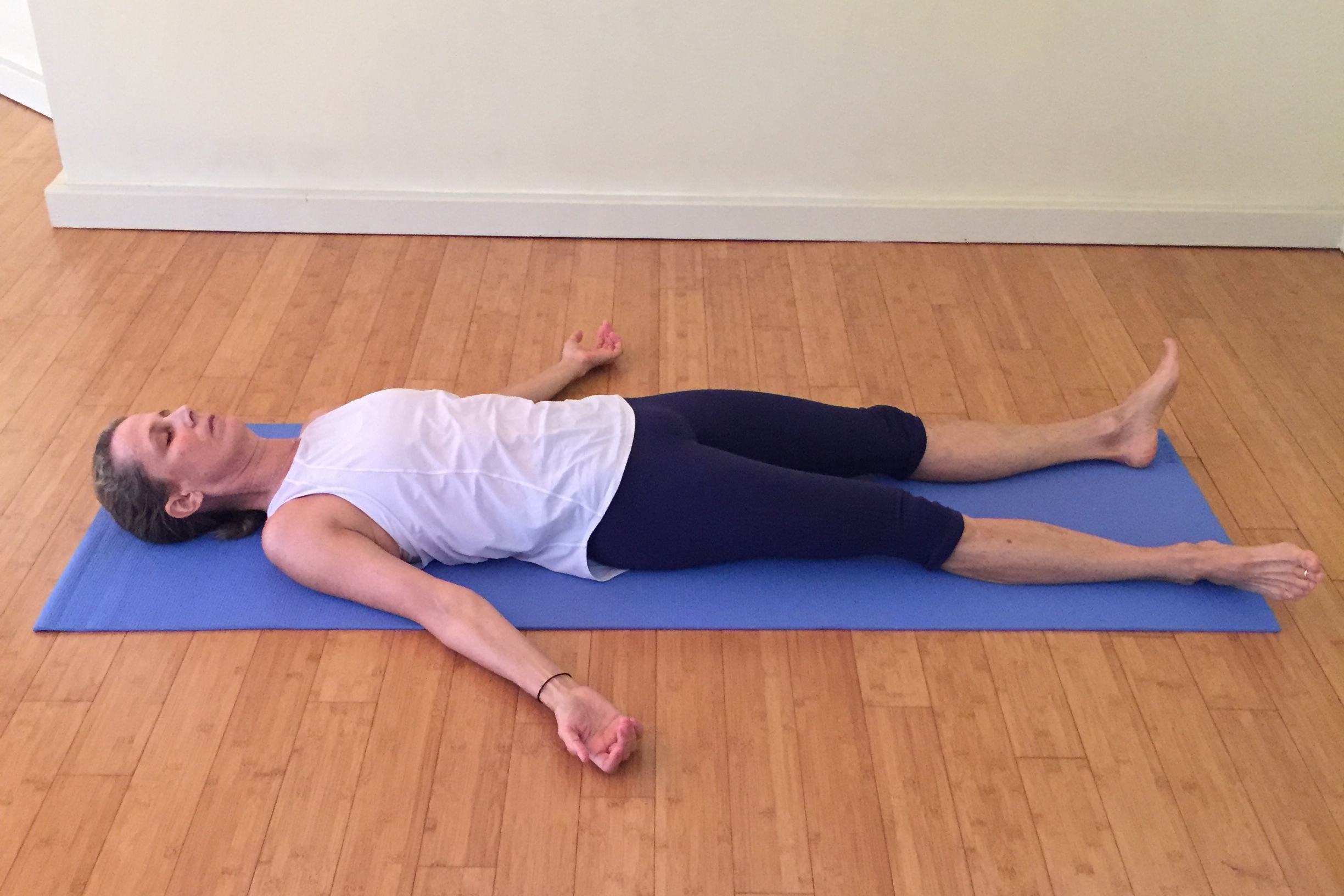
Savasana or Final Relaxation Pose

At the end of every yoga class we come into Savasana or Final Relaxation Pose.  But, did you know that the real translation of Savasana is Corpse Pose?  The ancient yogis meant for us to contemplate our own death.

Savasana-Karin.jpg

I heard this statistic on the radio this morning. Here in the US, as elsewhere in the world, we have 100% mortality rate.

Right?!

We know that, but we try not to think about it. We will all die someday, in the far future. Not today. Not tomorrow either. But who knows when they will die? This particular program was about being financially prepared for death by making a will. We need a will because we cannot take our stuff with us when we die. So what happens to our stuff? And how important is our stuff?

Imagine an angel comes down to tell you “Straighten up your affairs; you will not awake from your sleep tonight. You are coming with me.” How would that change your life? Would you worry about your stuff?  Making a will can give you some peace of mind, at least in terms of taking care of your material possessions. But contemplating your own death can be trickier. Death can be a great teacher. This ties in beautifully with the yogic idea of contemplating death as a way to live your life more fully.

I was talking about death in class last week. Savasana, or what we call Final Relaxation, literally translates to corpse pose. The ancient yogis meant for us to contemplate our deaths, not to fall asleep after our asana class. If you think about it, on a sub-conscious level, maybe that helps explain why a lot of people skip Savasana. It’s too uncomfortable. Just like contemplating death is too uncomfortable. But, we must not be afraid to discuss death. Let’s not get uptight about it. Instead, let this knowledge help you live every moment of your life fully, because every moment matters.

A friend recently recommended a book about mid-life. The book is called: Life Reimagined, The Science, Art and Opportunity of Midlife - by Barbara Bradley Hagerty.  In the book the author describes a conversation she had at lunch with her mother and another woman. She was recounting how her mother taught her integrity and her father taught her delayed gratification. She says, “Sometimes I wonder when it’s time to stop deferring and start gratifying.” Her mother looks at her and says, “It’s now, honey!  This is the time to enjoy your life. Don’t waste another moment!”  Barbara says something clicked inside her, and in that moment she realized how incredibly fortunate she was. She took stock of her life and counted her blessings, saying to herself, “Remember this moment, Barbara, life is very good.”

As a researcher, Barbara Bradley Hagerty found out that if you do this frequently, if you stop and take mental snapshots of meaningful moments in your life, it gives you the sensation that life is slowing down and it takes on more meaning.

From his book The Untethered Soul, author Michael Singer says this, “Learn to live as if you are facing death at all times and you’ll become bolder and more open. If you live fully, you won’t have any last wishes. You will have lived them every moment. Only then will you have fully experienced life and released the part of you that is afraid of living. There is no reason to be afraid of life. And the fear will fade once you understand that the only thing there is to get from life is the growth that comes from experiencing it. Life itself is your career, and your interaction with life is your most meaningful relationship. Everything else you are doing is just focusing on a tiny subset of life in the attempt to give life some meaning. What actually gives life meaning is the willingness to live it.  It isn’t any particular event; it’s the willingness to experience life’s events.”

What would you do differently if you knew you would not wake up tomorrow morning?

Top 10 Reasons for Doing Yoga

I recently asked my students to write down their three top reasons for doing yoga.  I received 40 responses.  Basically, I had a list of 142 different answers. Some of you could not restrain yourselves to just three reasons!

Without being able to ask for clarification on responses, I tried to put the answers into groups.  For instance, I put friendship and community together under the one category of community.  I put “Improves my posture” together with stretching and flexibility.  Does it really belong there?  Or is posture improvement more related to strength?   My list is more subjective than objective.  But the overall sentiment comes through.  I edited out a couple of outliers and this is what I came up with:

#10.   Peace and serenity.  5/142.  Someone used the word “oasis”.  The overall feeling for this category was a feeling or a period of calm in their day that they could count on.  I got the sense that this calmness sometimes carried over for a longer period of time than just the duration of the yoga class.

#9.  Spiritual practice.  9/142.  Some of you come to class for a connection to something greater than yourself.  Some spiritual seekers are non-denominational.  But, there were some who felt that their yoga practice deepened their particular faith.  I was heartened to know that people can do yoga and it does not interfere with their religious beliefs.

#8.  Community. 11/142.  A lot of you appreciated being in the company of like-minded individuals.

#7.  Energy and breath. 12/142.  Responses that fit into this category included everything from doing pranayama exercises to being able to take deeper and fuller breaths in general to feeling more energized overall.  Stress and anxiety create restrictions in the breath and some of you commented that find relief from that in your yoga practice.

#6.  Strength. 13/142.  Some of you do yoga to get stronger.  No one said this in their answers, but I would guess that, like most yogis, you don’t want to go into the gym and lift weights.  I always say that yoga is a balance of strength and flexibility; although, flexibility ranked much higher in this poll.  Read on!

#5.  Improved health. 15/142.  Creating this category was tricky.  Certainly peace and serenity, energy and breath and strength are all part of improved health.  But what helped me define this category were the responses that said, “yoga helps me with my… arthritis, low back issues, general issues of pain, headaches, …”

#4.  Feel good about self. 16/142.  What differentiated this category from peace and serenity was the self-reflection.  There seemed to be a distinction between being calm and being able to quiet the negative self-talk.

#3.  Stretching and flexibility. 18/142.  This one is self-explanatory.  More of you want stretching, though, rather than strength.

#2.  Mind, body and spirit. 18/142.  This category encompasses some of the others.  (Perhaps I should have made the top 5 reasons for doing yoga!)  But, what caused me to make a separate category was that some people lumped these three reasons were in one answer.  It seemed that you couldn’t separate the physical effects, from the mental, emotional and spiritual effects.  Apparently yoga makes you feel good on all levels.

#1.  Thoughtfulness. 25/142.  Meditation, centering, thoughtfulness, mindfulness, clarity, enlightenment, focus, grounding, being present, improved awareness, inspiration, nourishment, encouragement and feeling alive were all responses that seemed to fit into this category.  Since this was the number one answer, it is not about the poses, is it?

Thanks to all of you who participated in my informal survey.  I look forward to seeing you in class!


Karin

Most of what we know about yoga, we owe to B.K.S. Iyengar

Iyengar.jpg

I was very saddened to hear of the passing of Mr. Iyengar on August 20th. B.K.S. Iyengar was one of the founding fathers of modern yoga as we know it in the West.

Iyengar was sickly as a child, and he credited yoga with helping him gain his good health. His method of yoga was to use props to support the body to put it into the best possible alignment so that the postures and their benefits were accessible even to those with physical limitations. So, if you have ever used a block or a strap, or even a yoga mat, you have benefited from the yoga of Mr. Iyengar.

I have a favorite quote from Mr. Iyengar. I couldn't put my hands on it in time for this newsletter, but it went something like this:

Attention to alignment in asana is discipline; discipline leads to perfection and perfection is god.

To me this means we should show up regularly for our practice. We should strive to do the best with what we have and not worry about what someone else has or can do. If we do this with our whole hearts and with undivided attention, then we will shine with an inner light and know inner contentedness and bliss.

Practice Makes Perfect

Practice makes perfect. How many times have you heard that before? But is it true?

I had a guitar teacher who used to say, "Perfect practice makes perfect."

Eka-pada-viparita-dandasana-RG-200x300.jpg

I was learning to play scales on my guitar, and I had trouble with certain finger positions. My instructor asked me to practice picking up speed. I could play certain parts pretty fast. I would go along playing smoothly, and then I would stumble over this particular pattern. He stopped me and said to slow everything down again and keep going over the part I was having trouble with until I could get it perfectly. I could go only as fast as I could play it perfectly. He said that if I kept playing it the way I was practicing it, I would simply reinforce the same mistake over and over, and that is how I would play it. It made sense to me, and my ability to play those particular patterns improved.

The same thing happens in our yoga practice. We want to get our hamstrings to stretch more and we keep trying, but we don't seem to be getting anywhere. When this happens, you have to stop and look at what you are doing.

The first thing you have to ask yourself is are you being consistent? It takes repetition and consistency to change a pattern or habit, to lengthen your hamstrings or to deepen a back bend, let's say.

The other thing you have to look at is how are you practicing? Are you trying to speed ahead to get somewhere but stumbling over certain parts?

Often when we aren't progressing in our practice, it's because we are doing something wrong; we are out of alignment somewhere. That's the perfect time to slow down and really pay attention to what we are doing and how we are doing it.

One of the most common problems in folding forward is rounding in the back rather than hinging at the hips. As long as we round in our backs, our hamstrings will not be getting the stretch they need to lengthen. But, most students either don't know that they are rounding in their backs, or they don't want to back up and sit up straighter because they feel like they are not folding forward. They tend to want to skip over that part.

Every time I felt stuck in my yoga practice, where I felt that I wasn't making progress, the thing that helped the most was slowing down, backing up and starting over. By doing so, I was able to notice where I was stumbling over certain parts. I could smooth them out and practice them more perfectly. This is where progress is made.

It's not simply repeating something over and over. It's how we repeat the thing we are trying to practice.

Whenever you feel stuck in your yoga practice; slow down, back up and really pay attention to what you are doing and how you are doing it.

See if perfect practice makes perfect for you. And then settle in and practice.

Surrender

surrender-300x200.jpg

I love my job! I love helping people by teaching yoga. I love sharing the stuff I am working on and the insights I have gained over the years of practice. I particularly love training people to become yoga teachers. It is such a transformative process to watch someone who loves to practice yoga turn around and share why they love it so much.

In the process of their learning, I ask my teacher trainees to prepare classes and quotes and themes. They all share such wonderful  and tender parts of themselves. The things that we share as yoga teachers are often the very things we are working on ourselves.

One theme that a lot of us need work on is the theme of surrendering. It is a great topic for a yoga class and for life as we often have to embrace change.  I also talked about surrender last week as it relates to letting go and relaxing in Savasana. This past week, one of my students read something about the topic of surrender that resonated with us all so much, we asked her to share it. Thanks, Brina. Here it is:

"When dogs play ball, they often want to repeat the joy of running after the ball again and again. Some dogs cling to the ball, not understanding that to keep playing, they must let go. When I desire to maintain an experience, I may get so attached to it I block the receipt of the very thing I want."

"Letting go of what I desire is the way to receive it. As I let go, I give over to spirit and trust that my desired outcome, or something better, will come back to me. Clinging stops the law of circulation.  the cycle of giving and receiving."

What are you clinging onto? Maybe it is the very thing that you need to release in order to invite more abundance into your life. What do you think? I'd love to hear your comments below!

Santosha:  Fortunate? Unfortunate?

Santosha is the Sanskrit word for contentment and the second of the five Niyamas, or self practices. It is hard to find contentment. Modern marketing and advertising techniques are designed to make us want more, to be discontented with what we have. Most of us practice contentment when things are going our way, when things are good. It is so easy to be content under those circumstances. The trick is being content when things are not going your way, when you are having a bad day. How can we find contentment? How do we practice Santosha?

We have all heard the following statements about practicing contentment:

When life serves you lemons, make lemonade.
Be happy with what you've got.
I complained about not having shoes until I saw a man with no feet.
It is better to want what you have than to have what you want.

In the Yoga Sutras, Patanjali writes that "Superlative happiness arises from practicing contentment." Samtoshaad anuttamah sukha-laabhah. Yoga Sutra 2.42

The process is to not to be content but rather to practice contentment. These are the steps:
1) Notice you're practicing being discontented.
2) Make a decision to practice contentment.
3) Here's the yogic key: don't think of something that makes you content. That something is somewhere else, or someone else, other than where you are and what you are doing; it is a way of becoming less present. Instead, simply be content with where you are and what you are doing, even if it isn't what you wanted to have happening in that moment. Practice contentment. This practice not only makes you content, it makes you more present. It is about you being present to your own life, by being present within your own self This is what makes it easy for Patanjali to fulfill his promise.

I'd to share my favorite story about contentment. It is called Fortunate? Unfortunate?:

Fortunate, Unfortunate?

There once lived a farmer. He lived on a farm with his wife, his son and one horse that the family had raised from a colt. The family planned to enter the horse in the annual county fair and hoped it would win prizes that could lead to breeding opportunities. This would ensure a nice future income for the farmer and his family.

The night before the fair, a violent storm swept over the countryside. When the farmer and his family awoke early the next morning, they found that the fences had been blown down. Their prize stallion was nowhere to be found. The farmer's wife was beside herself with despair. The neighbours came and joined in the wife's grief.

"What terrible misfortune has befallen us!" cried the wife. "Yes, yes, this is most unfortunate,"the neighbours agreed. But the farmer said, "Fortunate or unfortunate, I don't know, let's wait and see."

A week passed and the farmer and his family were sitting at the breakfast table. Looking out the kitchen window they saw a herd of horses galloping toward the farm. It was their faithful stallion, leading five horses and a little filly behind him. He had found a herd of wild mares, and now he was bringing them home. The farmer's family ran out to open the corral gate for the horses. The farmer's wife was overjoyed and exclaimed, "What a fortunate turn of events, this is unbelievable!" The neighbours rushed over exclaiming, "How fortunate you are!" The farmer just said, "Fortunate or unfortunate, I don't know, let's wait and see."

Over the next weeks the farmer and his son were busy training the new horses. One day the son was thrown by one of the wild horses. He suffered a bad fall and broke many bones. The farmer's wife was very upset. Between her sobs she said, "We never should have let those wild horses in; this is a most unfortunate accident! My poor son." The neighbours came to commiserate with the wife about her misfortune. And the farmer said, "Fortunate or unfortunate, I don't know, let's wait and see."

Two days later the king's soldiers came by the little farm. The king had declared war on an adjacent country and the soldiers had orders to draft all able-bodied young men into the army. On seeing the farmer's son with both legs and both arms broken, not to mention several ribs fractured and numerous lacerations on his face and head, they left him home and continued on to the next family. The farmer's wide wept with relief, crying, "How lucky we are! This is most unfortunate." The neighbours most of whom had had sons taken off to war, said, "You are indeed most fortunate." The farmer said, "Fortunate or unfortunate, I don't know, let's wait and see."

Some months passed. The farmer's son was recovering nicely; he was able to walk, albeit with a cane. A messenger from the kings palace dropped by the farm to inquire about the health of the son. Seeing the son's improved condition he stated that by order of the king, the son must come at once to the palace to work in the gardens and stables. There was a shortage of workers at the palace due to the war. What could the family do but let their son go? The wife was bitterly angry and cursed the king for his unfairness. "How unfortunate we surely are! We have lost our only son and there will be no one to help us with the farm now." The neighbours came by to console the wife, murmuring, "What an unfortunate turn of events." The farmer just said, "Fortunate or unfortunate, I don't know, let's wait and see."

The king had a beautiful daughter. One day she looked out of her window and saw the handsome new gardener. She fell in love with him and went to her father and said, "Father, I have found the man I wish to marry. Please make it happen!" The king, unable to resist a request from his lovely daughter replied, "Of course, it shall be done."

The next day a messenger was sent from the palace to the farm, bearing a wedding invitation for the farmer and his wife, as well as an invitation for them to come live permanently at the palace. Can you imagine the reaction of the farmer's wife? She was ecstatic and could hardly contain her joy. Jumping up and down she laughed, "This is incredible, how fortunate!" The neighbours exclaimed, "Indeed, this is a very fortunate turn of events!" And the farmer, as usual, said, ...!"

(a story from Jivamukti Yoga)

How about you? Are you fortunate? unfortunate? Shall we wait and see?

Namaste,

Karin